
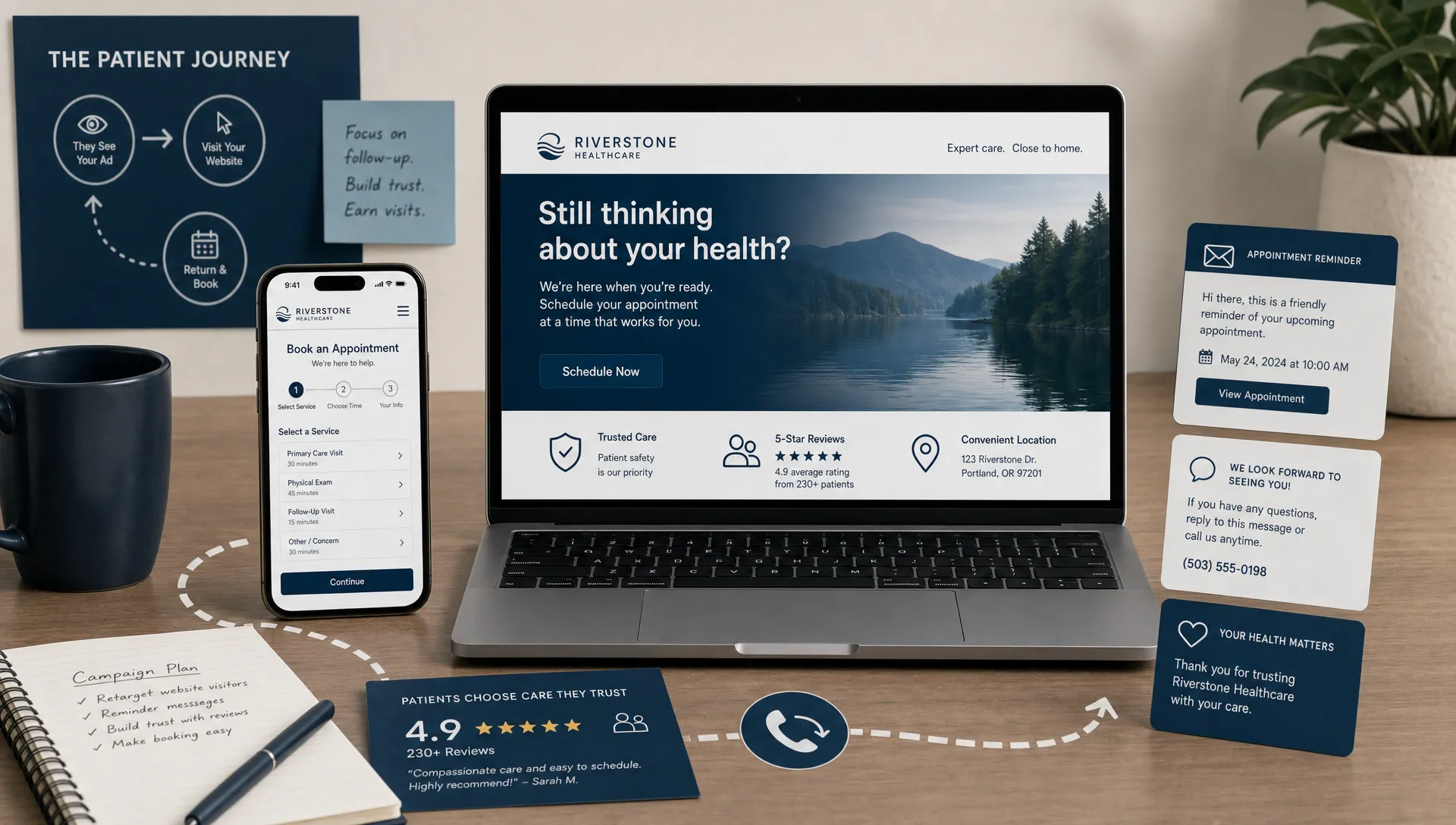
Most healthcare leads do not disappear because they lost interest. They get interrupted, compare options, ask a spouse, check insurance, or plan to call later and forget. For dentists, orthodontists, optometrists, pain physicians, and specialty practices, that gap between intent and action is where Google retargeting ads can quietly recover revenue.
The key word is quietly. In healthcare, retargeting cannot feel invasive, imply a private condition, or rely on patient data that should never be used for advertising. The goal is not to follow people around the internet with uncomfortable messages. The goal is to reintroduce your practice to people who already showed interest and give them a simple, trustworthy path back to scheduling.
Why Google retargeting ads matter for healthcare practices
A first website visit rarely tells the whole story. Someone searching for emergency dental care may click a few practices before choosing one. A parent researching braces may compare financing pages for weeks. A patient considering LASIK, cataract surgery, regenerative medicine, or chiropractic care may need multiple touchpoints before calling.
Google retargeting ads help you stay visible during that decision window. Instead of paying only to attract new clicks, you can use previous engagement signals to reach people who are already familiar with your brand. That usually makes retargeting most useful as a support layer for search, SEO, and a strong conversion-focused website.
If your practice is not yet attracting the right visitors, fix that first. Retargeting works best when the original traffic has high intent, which is why many practices start by improving Google Search Ads for healthcare practices before layering on retargeting.
The healthcare compliance line you cannot cross
Retargeting in retail can say things like, You left this item in your cart. Healthcare marketing is different. Ads should not reveal or imply that someone has a health condition, procedure interest, diagnosis, disability, or treatment need.
Google's personalized advertising policy restricts targeting based on sensitive interest categories, including many health-related interests. HIPAA and state privacy laws may also apply depending on what data you collect, how it is stored, and how it is used. The U.S. Department of Health and Human Services also provides guidance on HIPAA and marketing, which should be reviewed with qualified counsel when patient data is involved.
For practical purposes, healthcare practices should avoid uploading patient lists, diagnosis-based lists, treatment-specific lists, or any audience built from protected health information unless legal and compliance teams have clearly approved the use case. In many situations, it is safer to avoid patient-list advertising entirely.
Regulated and regulated-adjacent organizations often earn trust by making boundaries explicit. Healthcare advertisers should bring that same clarity to retargeting: define what data is used, what is excluded, and how patient privacy is protected.
What makes a retargeting lead ready to book?
A ready-to-book lead is not just anyone who visited your website. It is someone whose behavior suggests they are comparing providers, checking logistics, or looking for the next step.
Good retargeting starts with intent segmentation. You do not need to know a person's private health details to identify useful commercial signals. A visitor who reached your appointment page, viewed your location page, or clicked your phone number is different from someone who read one educational article and left.
| Audience signal | Why it suggests booking intent | Safer message angle |
|---|---|---|
| Visited a contact, appointment, or request-a-consult page | The person was close to taking action | Make scheduling easy and emphasize location or availability if accurate |
| Returned to the website more than once | The person may be comparing practices | Build trust with reviews, provider experience, and convenience |
| Viewed insurance, financing, or payment information | Cost or coverage may be part of the decision | Point to payment options or accepted insurance only if your page is accurate |
| Clicked a call button but did not complete a tracked conversion | The person considered direct contact | Offer a simple call or online scheduling option |
| Engaged with a practice video or brand campaign | The person recognizes your practice | Reinforce credibility, comfort, and next steps |
The strongest retargeting audiences are usually recent and action-oriented. Someone who visited yesterday is more valuable than someone who visited 120 days ago. For healthcare, shorter windows also reduce the chance that ads feel intrusive.
| Retargeting window | Best use | Suggested approach |
|---|---|---|
| 1 to 7 days | Highest intent follow-up | Use appointment-focused messaging and direct landing pages |
| 8 to 30 days | Comparison-stage prospects | Use trust, convenience, reviews, and provider fit |
| 31 to 90 days | Longer decision cycles | Use light brand reminders and educational offers where appropriate |
Retargeting messages that feel helpful, not creepy
The difference between effective and uncomfortable retargeting is often the copy. A patient should never feel like your practice knows what private page they visited or what problem they may have.
Better ad angles include:
- Schedule online with our Louisville-area team
- Appointments available this week, if true
- Meet the providers before your visit
- See accepted insurance and payment options
- Have questions? Call our office today
Risky ad angles include anything that implies a diagnosis, personal condition, or observed behavior. Avoid lines like still struggling with back pain, we saw you checking dental implants, or ready to fix your cataracts. Even if the service is legitimate, the personalization can feel invasive and may create policy risk.
A safer principle is to write ads as if they could be seen by anyone in your local market. The copy should promote the practice, the experience, and the next step, not the user's private reason for visiting.
Where Google retargeting fits in your ad account
Google retargeting can run through several campaign types, but each has a different role. For healthcare practices, control matters. The more sensitive the service line, the more cautious the setup should be.
Search remarketing can adjust bids or messaging when a previous site visitor searches again. This can be useful because the patient is actively expressing intent in that moment. Display and Demand Gen can keep your practice visible across Google inventory, but they need careful frequency controls. YouTube can work well for trust-building, especially for higher-consideration services such as orthodontics, LASIK, implants, pain care, or physical therapy.
Performance Max may use audience signals, but it gives advertisers less placement and query control than traditional Search campaigns. For practices with strict compliance needs, it should be used thoughtfully and monitored closely.
A simple retargeting structure often works better than a complicated one. Separate your hottest audience, such as recent appointment-page visitors, from broader website visitors. Give the hottest audience the clearest scheduling path. Give broader audiences a softer trust-building message.
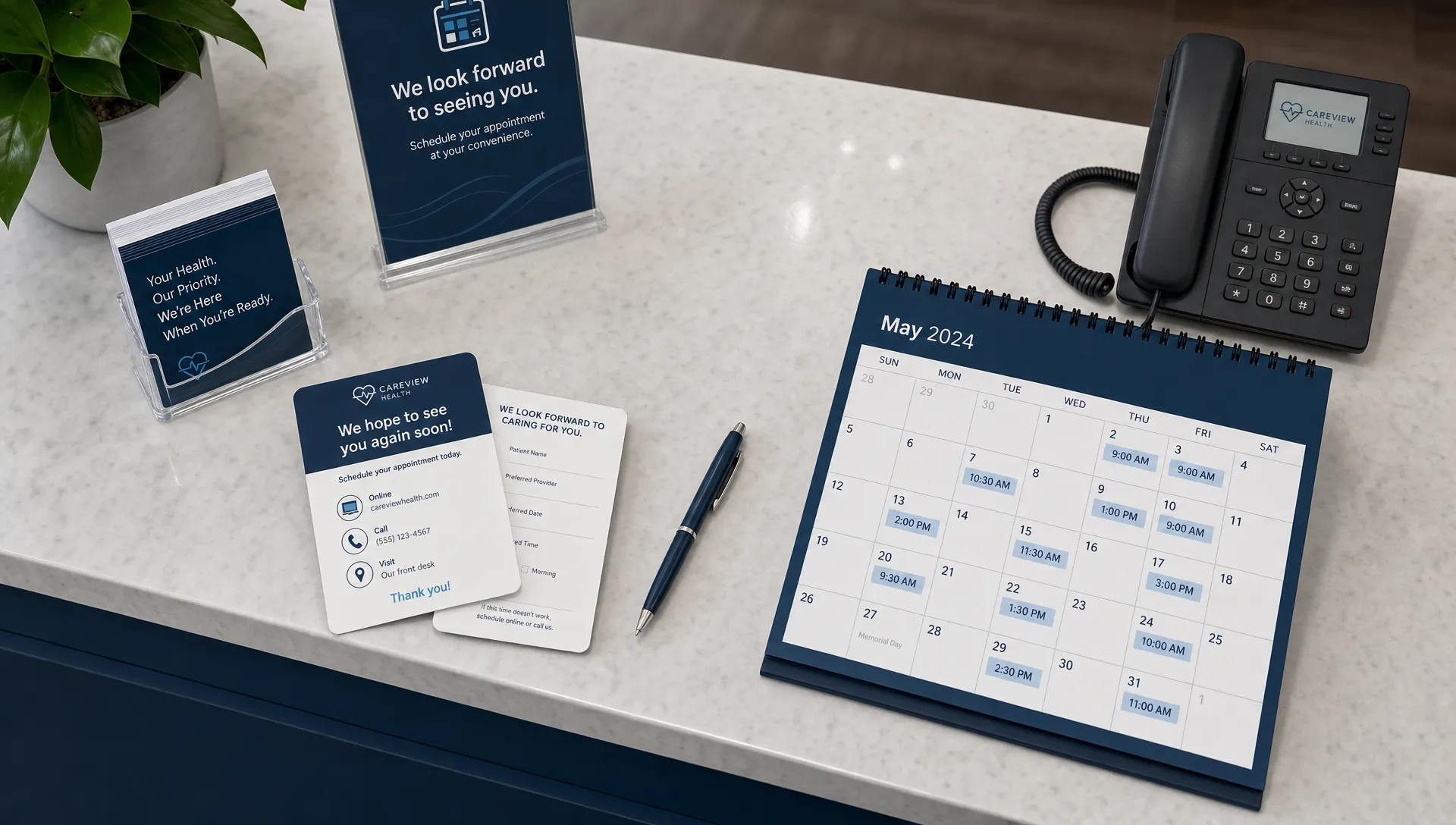
Send returning visitors to the right page
Retargeting does not fix a weak landing page. If the ad brings someone back and the page still creates friction, the click is wasted.
For ready-to-book leads, the landing page should remove uncertainty. It should clearly show what the practice offers, where it is located, how to book, what happens next, and how to contact the office. Mobile performance matters because many returning visitors will click from a phone.
Strong retargeting landing pages usually include a clear headline, a prominent phone number, an online scheduling or request form, trust signals, location details, and concise answers to common objections. If the page is for a specific service, avoid overloading it with every service your practice offers.
The same principle applies to your broader Google Ads system. Campaigns should be built around booked appointments, not just clicks. Louisville Web Lab covers that foundation in more depth in this guide to improving lead quality with Google Ads expertise.
Budgeting for retargeting without wasting spend
Retargeting audiences are usually smaller than cold audiences, so they do not need the same budget as Search. Many local healthcare practices start by allocating a modest share of their paid media budget to retargeting, then scale only when conversion data supports it.
Budget should follow audience quality. A recent visitor to your booking page deserves more attention than a casual blog reader. A person who clicked from a high-intent Search ad is usually more valuable than someone who landed on an educational page through a broad informational query.
Frequency caps are important. Seeing the same healthcare ad ten times in a day can feel unsettling. A lower-frequency reminder over several days often performs better than aggressive repetition. If your campaign platform does not provide the exact frequency control you want, monitor placement reports, impressions per user where available, and assisted conversion quality.
What to track beyond clicks
Clicks are not the goal. Booked appointments are the goal. Retargeting can look successful if you only measure impressions, click-through rate, or view-through conversions, but those numbers can exaggerate impact.
Track metrics that connect advertising to real practice growth.
| Metric | Why it matters |
|---|---|
| Returning visitor conversion rate | Shows whether retargeted visitors are taking action |
| Calls from ads and landing pages | Captures high-intent phone leads |
| Form submissions or booking requests | Measures direct conversion volume |
| Scheduled appointments | Separates leads from actual patient opportunities |
| Cost per booked appointment | Connects spend to operational value |
| New patient rate | Helps distinguish existing-patient activity from growth |
Offline conversion tracking can be powerful, but healthcare practices must be careful. Do not pass protected health information into ad platforms. Avoid conversion names, form fields, URLs, or CRM data that disclose sensitive information. Work with compliance-aware marketers and legal counsel when connecting ad platforms to scheduling or patient management systems.
Common mistakes that weaken retargeting campaigns
The biggest mistake is treating all visitors the same. A person who read a general blog post is not as valuable as someone who opened the appointment page. Segmenting by intent lets you spend more where booking probability is higher.
Another mistake is making the ad too personal. Healthcare retargeting should feel like a general brand reminder, not a private nudge. If the ad would embarrass someone if it appeared on a shared device, rewrite it.
Practices also waste money by running retargeting before their website is ready. If forms are hard to use, phone numbers are not tappable, pages load slowly, or calls go unanswered, retargeting simply sends people back into the same broken experience.
Finally, do not over-credit retargeting. Some visitors would have booked anyway. Use realistic attribution, compare audience performance over time, and look for lift in booked appointments, not vanity metrics.
A practical retargeting setup for healthcare practices
A clean setup usually starts with consent-aware tracking, conversion actions that do not expose private information, and audience definitions based on general intent signals. From there, build a small campaign that prioritizes recent high-intent visitors.
Your first version does not need dozens of ad groups. Start with a hot audience, a warm audience, and clear exclusions for people who already converted where appropriate. Write ads that focus on convenience, trust, and scheduling. Send traffic to a focused booking page. Review search terms, placements, conversions, and lead quality every week during the early stage.
As data grows, refine by service line, location, device, and time lag. If many leads call after hours, automation and call follow-up may matter more than another ad variation. If people revisit financing pages but do not book, the page may need clearer payment information. If mobile clicks are high but conversions are low, the booking experience may be too slow or confusing.
Retargeting is not a magic fix. It is a recovery system. When connected to strong Search campaigns, local SEO, landing pages, reviews, and fast follow-up, it helps bring back people who were already close to choosing a provider.
Frequently Asked Questions
Do Google retargeting ads work for dentists, optometrists, chiropractors, and other healthcare practices? Yes, they can work well when they are built around privacy-safe intent signals and measured by booked appointments. They are especially useful for services with longer decision cycles, such as orthodontics, dental implants, LASIK, pain care, and physical therapy.
Can healthcare practices retarget people who visited condition-specific pages? Be very cautious. Health-condition interest can be sensitive under Google policies and privacy laws. Avoid ad copy or audience strategies that imply a person's diagnosis, symptoms, or treatment interest. Get compliance guidance before using any sensitive audience data.
How long should a healthcare retargeting audience last? Shorter windows are usually safer and more effective. A 1 to 7 day audience is often best for high-intent follow-up, while 8 to 30 days can support comparison-stage prospects. Longer windows should use lighter, brand-focused messaging.
Should retargeting replace Search ads? No. Search captures active demand when patients are looking for care. Retargeting brings some of those visitors back after they leave. The two work best together.
What is the best retargeting call to action for a healthcare practice? The safest and most effective CTAs are usually practical, such as schedule online, call the office, request an appointment, meet the provider, or view accepted insurance. Avoid CTAs that reference private symptoms or conditions.
Bring back more ready-to-book leads
If your practice is paying for clicks but too many qualified visitors leave without booking, retargeting may be the missing follow-up layer. The right setup can re-engage high-intent prospects, protect patient trust, and connect more of your marketing spend to real appointments.
Louisville Web Lab helps healthcare practices build SEO, Google Ads, websites, automation, and patient acquisition systems that focus on measurable growth. If you want a clearer path from search visibility to scheduled appointments, book a diagnostic strategy call with Louisville Web Lab.