

If your Google Ads account is creating plenty of form fills but few scheduled patients, the problem may not be lead volume. It may be lead quality. For healthcare practices, this difference matters because every poor-fit inquiry costs budget, staff time, and appointment capacity.
A true Google Ads expert looks beyond clicks and cost per lead. Their job is to help the practice attract people who are more likely to need the service, live in the right area, understand the next step, and become booked appointments. That requires strategy across targeting, tracking, landing pages, call handling, and compliance.
Lead quality improvement is especially important for dentists, orthodontists, optometrists, pain physicians, and specialty clinics. Many of these services involve high-intent searches, insurance questions, urgency, and personal health concerns. Small changes in campaign setup can dramatically change the type of patient who contacts the office.
Lead quality means more than a cheaper lead
A low cost per lead can look good in a report while the front desk knows the truth: the phone calls are wrong, the forms are incomplete, or the patient is looking for a service you do not provide. The expert's first move is to define what a good lead actually means for your practice.
For a dental implant practice, a quality lead may be an adult within driving distance who understands the consultation process and has a realistic expectation about cost. For a pediatric dentist, it may be a parent searching for a nearby provider that accepts new patients. For a pain management clinic, it may be someone seeking evaluation for a specific condition, not a generic wellness inquiry.
An expert will usually separate marketing metrics from practice outcomes:
| Metric | What it measures | Why it matters for lead quality |
|---|---|---|
| Clicks | People who clicked an ad | Shows traffic, not patient fit |
| Leads | Calls, forms, or appointment requests | Shows interest, but may include poor-fit inquiries |
| Qualified leads | Leads that match service, location, and patient criteria | Shows whether campaigns are attracting the right people |
| Booked appointments | Leads that turn into scheduled visits or consults | Connects ads to real practice growth |
| Show rate | Booked patients who attend | Reveals whether leads are serious and well-matched |
This shift changes optimization. Instead of asking which campaign generated the cheapest forms, the expert asks which campaign generated the best patient conversations and the highest percentage of scheduled visits.
If you are still building the foundation, our guide to setting up Google Ads for better healthcare leads covers campaign setup decisions that affect lead quality from day one.
Auditing where low-quality leads enter the system
Bad leads rarely come from one issue. They usually come from a combination of broad keywords, vague ad copy, weak location controls, landing pages that overpromise, and tracking that rewards the wrong conversion.
A Google Ads expert starts with an audit that connects the ad account to front desk reality. They compare search terms, call recordings if permitted by your compliance policies, form submissions, appointment data, and staff feedback. This gives the practice a real picture of why leads are unqualified.
Common findings include:
- Calls from outside the service area.
- Existing patients clicking ads for routine contact needs.
- Searches for jobs, school programs, free clinics, or DIY treatment.
- Patients looking for emergency care when the campaign promotes elective procedures.
- Leads generated by automated placements that do not reflect active search intent.
- Forms submitted by people who cannot be contacted.
After the audit, the expert can prioritize fixes based on impact. For example, excluding irrelevant search terms may improve lead quality immediately, while better appointment tracking can take longer but produce more reliable optimization over time.
Tracking booked appointments, not just form fills
Google Ads can optimize only toward the signals it receives. If every form fill is treated as equal, the platform may learn to find people who fill out forms easily, not people who become patients.
A lead-quality focused expert helps identify better conversion events. In healthcare marketing, those events may include qualified phone calls, scheduled consultations, completed appointment requests, or offline appointment outcomes imported from a CRM or practice management workflow. The key is to track progression, not just initial interest.
This does not mean uploading protected health information into an ad platform. Healthcare practices need careful privacy controls, consent language, and vendor review. A good expert knows when to involve legal, compliance, or HIPAA guidance before changing tracking. Google also maintains specific healthcare and medicines advertising policies, which makes compliance awareness part of the work, not an afterthought.
The practical goal is simple: give the ad account better feedback. Once the system can distinguish booked appointments from junk submissions, bidding and budget decisions become much smarter.
Refining keywords around patient intent
Keyword strategy is one of the fastest ways a Google Ads expert improves lead quality. The goal is not to appear for every possible search. The goal is to appear for the searches that indicate readiness, fit, and relevance.
High-intent healthcare searches often include a service, a condition, or a location. A patient searching for same day tooth extraction near me is expressing a different need than someone searching tooth pain causes. A person looking for dry eye specialist Louisville has different intent than someone looking for eye drops.
An expert reviews keyword match types, search term reports, and negative keywords regularly. They also separate campaigns by service line so that high-value or specialized treatments do not compete with general awareness queries.
Here is how intent usually changes lead quality:
| Search intent | Example pattern | Lead quality risk | Expert response |
|---|---|---|---|
| Informational | What causes jaw pain | Low readiness to book | Use for SEO or education, not always paid search |
| Local service | Chiropractor near me | Competitive but relevant | Use strong location targeting and clear landing pages |
| Procedure-specific | Dental implant consultation | Higher value and higher consideration | Separate into its own campaign and landing page |
| Price-only | Cheapest braces | May attract poor-fit inquiries | Clarify consultation process, financing, and value |
| Irrelevant | Dental assistant jobs | Wasted spend | Add negatives and monitor search terms |
This level of intent control is one reason healthcare campaigns should not be managed like generic ecommerce campaigns. A patient deciding on orthodontics, cataract surgery, chronic pain treatment, or a supervised medical program needs different messaging than someone buying a simple product online.
Using ad copy to prequalify patients
Ad copy should attract the right people and quietly filter out the wrong ones. This is where many campaigns fail. Vague copy like trusted care near you may get clicks, but it does not tell the patient what service is offered, what makes the practice relevant, or what action to take.
An expert writes ads that reflect real patient decision factors: service type, location, appointment availability, credentials when appropriate, insurance or financing considerations if accurate, and the next step. The copy should be clear but not exaggerated.
For example, a dental implant campaign may mention implant consultations rather than general dental care. An optometry campaign may separate annual eye exams from dry eye treatment. A chiropractic campaign may avoid implying guaranteed pain relief and instead focus on evaluation, care options, or appointment availability.
Prequalifying through ad copy can reduce raw lead volume, but that is often the point. Ten serious inquiries are more valuable than thirty confused ones.
Improving landing pages so patients understand the fit
A click becomes a quality lead when the landing page confirms that the patient is in the right place. If the landing page is generic, slow, thin, or unclear, users may submit poor-quality forms simply because they still have unanswered questions.
A Google Ads expert evaluates the landing page through the lens of patient readiness. Does the page match the ad? Does it explain the specific service? Does it state the location clearly? Does it reduce anxiety? Does it make contacting the practice easy from a mobile phone?
For healthcare practices, better landing pages often include:
- A clear headline that matches the service searched.
- Trust signals such as provider information, reviews, credentials, or before-and-after policies when appropriate.
- Practical details like location, hours, appointment types, payment or insurance guidance if accurate.
- A simple form that asks enough to qualify the inquiry without creating friction.
- A prominent phone option for urgent or high-intent patients.
Landing page work is not just design. It is conversion strategy. If the page promises a free consultation but the office process is different, the lead quality problem will show up later as frustration and no-shows. If the page fails to mention that the practice serves a specific city or treatment category, the campaign may attract the wrong audience.
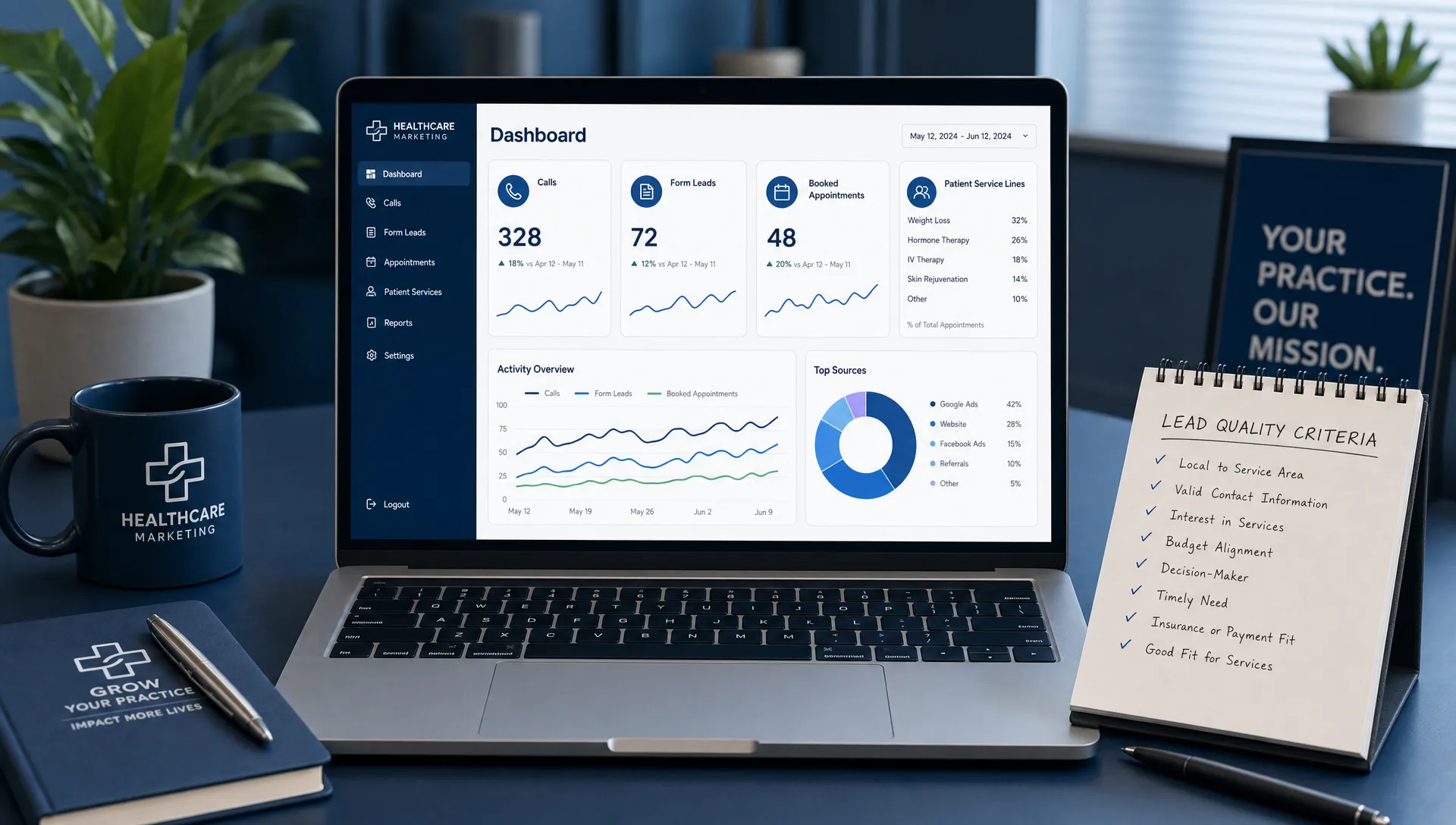
Controlling geography, schedule, and device behavior
Local healthcare advertising depends on precision. A few extra miles can change lead quality, especially in competitive markets or service lines where patients prefer a nearby provider.
An expert reviews radius targeting, city targeting, location presence settings, zip code performance, and call extension activity. They also consider when the practice can actually respond. If calls run heavily after hours and nobody answers, the campaign may generate leads that decay before the office follows up.
Device behavior matters too. Many patient searches happen on mobile. A mobile user may prefer calling, while a desktop user may spend more time reading before submitting a form. An expert does not assume these patterns. They review data, call outcomes, and booking rates by device before making bid or landing page decisions.
Paid search can work well when schedules need to be filled, but the campaign must be aligned with real lead handling. A fast front desk process, clear intake path, and realistic appointment availability can all influence whether a Google Ads lead turns into a patient.
Filtering with negatives, exclusions, and audience signals
Negative keywords are one of the least glamorous parts of Google Ads, but they are essential for lead quality. In healthcare, negative keyword strategy helps avoid clicks from people looking for employment, training, free advice, insurance-only information, unrelated symptoms, or services the practice does not offer.
A good expert builds negative keyword lists from actual search terms, not assumptions alone. They also update them continuously because patient search behavior changes. Competitors launch new offers, Google changes query matching, and seasonal demand shifts.
Beyond negatives, exclusions may include locations, ad schedules, low-quality placements, or audience segments that consistently fail to become qualified leads. Audience signals can also help guide bidding, but healthcare advertisers must use them carefully because sensitive health categories and remarketing restrictions apply. The expert's job is to balance performance with policy and patient trust.
Aligning bids and budgets with patient value
Lead quality improves when budget follows value. Not every service line deserves the same bid, and not every lead should be worth the same amount to the account.
A Google Ads expert works with the practice to understand which appointment types matter most. A general dentistry hygiene visit, an orthodontic consultation, and an implant consult may have different economics, capacity constraints, and follow-up needs. The expert can then allocate budget toward campaigns that produce stronger practice outcomes, not just higher lead counts.
This is where practices should be cautious about focusing only on cost per lead. Lowering cost per lead can be helpful, but not if it shifts spend toward poor-fit patients. If cost efficiency is the priority, the safer target is qualified cost per booked appointment or cost per accepted consult. For a deeper look at efficiency without sacrificing fit, see our guide to Google Search campaign tips to lower cost per lead.
Improving the handoff from ad click to front desk
A Google Ads expert cannot control every patient conversation, but they should care deeply about what happens after the click. Many lead quality problems are actually lead handling problems.
If a patient calls and reaches voicemail, submits a form and waits two days, or receives a generic response that does not address their concern, the campaign may be blamed for a broken follow-up process. Good experts look for these leaks with the practice team.
They may review call answer rates, missed call patterns, form response time, appointment request workflows, and automation opportunities. They may also recommend separating new patient inquiries from existing patient requests so ad-generated leads receive the right follow-up.
For healthcare practices, speed matters because the patient may contact several providers in one search session. Clear intake questions also matter because the office needs to identify service fit without making the process feel clinical or intimidating before the first appointment.
What a strong lead-quality report should show
A monthly Google Ads report should not be a screenshot of clicks, impressions, and average CPC with a few green arrows. Those metrics have their place, but they do not tell the full story.
A lead-quality report should connect campaign activity to patient acquisition outcomes. It should explain what changed, what was learned, and what will happen next. The report should also include observations from the practice, because front desk feedback often reveals issues that analytics cannot see.
Useful reporting categories include:
| Reporting category | What to look for | Decision it supports |
|---|---|---|
| Search terms | Queries that generated calls, forms, and poor-fit leads | Add negatives or build new ad groups |
| Conversion quality | Forms, qualified calls, booked appointments, no-shows if available | Adjust bidding and conversion goals |
| Service line performance | Lead quality by treatment or specialty | Reallocate budget |
| Location performance | Cities, zip codes, or radius segments | Tighten or expand geography |
| Landing page behavior | Conversion rate, call clicks, form completion, mobile performance | Improve page messaging and layout |
The best reports make decision-making easier. They help the practice see whether Google Ads is producing real patient opportunity, not just activity.
Signs you need a Google Ads expert focused on lead quality
You may not need more budget. You may need better strategy. Consider bringing in expert help when the campaign is producing leads but the office says they are not good leads, when cost per lead is rising while bookings stay flat, or when nobody can explain which keywords produce actual appointments.
Other warning signs include frequent irrelevant calls, high spend on broad searches, landing pages that do not match ads, no separation between service lines, and conversion tracking that counts every click-to-call as a successful lead. If your reports celebrate form fills but your schedule does not improve, the account is probably optimizing for the wrong thing.
The right expert will ask about practice goals before touching bids. They will want to understand capacity, service mix, patient fit, geography, intake process, and what happens after a form or phone call. That is the difference between managing ads and building a patient acquisition system.
Frequently Asked Questions
What does a Google Ads expert do for lead quality? A Google Ads expert improves lead quality by refining targeting, keywords, ad copy, conversion tracking, landing pages, and follow-up workflows so campaigns attract patients who are more likely to book.
Why am I getting Google Ads leads that do not become patients? Common causes include broad keywords, weak negative keyword lists, vague ad copy, poor location targeting, slow follow-up, and conversion tracking that rewards form fills instead of booked appointments.
Should healthcare practices optimize for cost per lead? Cost per lead is useful, but it should not be the only goal. A higher-cost lead that books and fits the practice may be more valuable than a cheaper lead that never answers or needs a service you do not provide.
Can Google Ads improve lead quality without lowering lead volume? Sometimes, but not always. Improving quality may reduce total lead count at first because the campaign stops attracting poor-fit clicks. The better goal is more qualified opportunities and more booked appointments.
How long does it take to improve lead quality? Some fixes, such as adding negative keywords or tightening geography, can help quickly. Bigger improvements from better tracking, landing page testing, and offline appointment feedback usually require ongoing optimization.
Turn ad spend into better patient conversations
If your practice is paying for Google Ads but the leads are not turning into scheduled patients, the next step is not guessing. It is diagnosing where quality breaks down across targeting, tracking, landing pages, and follow-up.
Louisville Web Lab helps healthcare practices connect SEO, Google Ads, websites, automation, reputation, and patient acquisition strategy around measurable growth. If you want a clearer view of what your campaigns are really producing, schedule a diagnostic strategy call with Louisville Web Lab and find out where better leads can come from.