
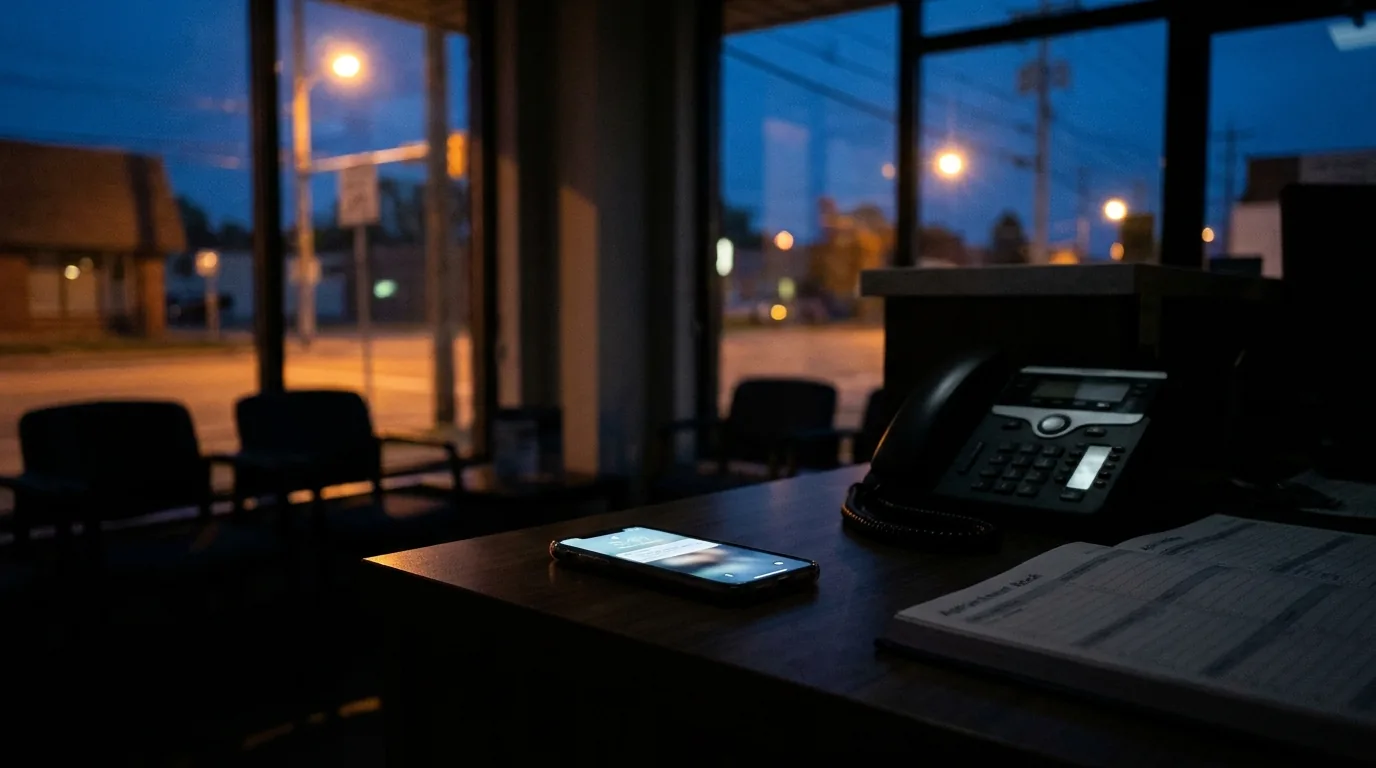
A full-arch patient has usually been living with the problem for years. The inquiry is the moment they finally decide to do something about it. What happens in the next hour decides whose patient they become.
Most of the conversation about full-arch marketing is about getting the inquiry: the ads, the landing page, the cost per lead. This post is about the part after that, which gets far less attention and loses more cases. I'll call it the response gap: the time between a full-arch patient reaching out and a real person having a real conversation with them.
When full-arch patients actually reach out
Picture the inquiry. It's a Thursday, a little after nine at night. The kids are in bed. Somebody who has hidden their smile in photos for two years finally fills in the form on a practice's full-arch page, or calls and gets the after-hours message.
That isn't a claim about any one practice. It's how people deal with the thing they've put off: late, at home, when there's finally a quiet minute and the nerve to go with it.
Here's what usually happens next. The front desk sees the form Friday morning, between the hygiene patients and the insurance calls. Someone calls once. It goes to voicemail. Friday is busy, the weekend comes, and nobody calls twice.
By Monday, that person has filled in two more forms. One of those practices answered on Thursday night. That person is now somebody else's patient, and the first practice never learns their name. Their report shows a lead. It doesn't show the case that walked out the door.
168 hours, 45 attended
There are 168 hours in a week. A practice open eight to five, Monday to Friday, has someone at the front desk for about 45 of them. That leaves 123 hours a week when an inquiry arrives and nobody is there to take it.
That isn't a criticism of the front desk. They're doing the job they were hired for, which is the patients standing in front of them. A form that arrives at 9:14 on a Thursday was never going to be their priority at 9:14 on a Thursday.
The wider market isn't fast either. In one study, researchers audited 2,241 companies. The average first response to an inquiry took 42 hours, and only 37% answered within the first hour. That study was about businesses in general, not dental practices, and I won't pretend it tells you anything about yours. It tells you the bar is low, which means answering properly is still a real edge.
Most practices don't have a lead problem. They have a Tuesday afternoon problem. The inquiry came in. Nobody answered it in time.
Why full-arch makes the gap more expensive
The response gap costs every practice something. It costs a full-arch practice more, for three reasons.
The patient took years to get here. Someone who has put off treatment that long is easy to lose. A slow or cold first contact gives them a reason to put it off again.
They're comparing. Full-arch patients often look at more than one practice, sometimes a national chain and a local alternative at the same time. Whoever has the first real conversation gets to frame everything that follows.
One case is worth a lot. When a single started case is worth what a full-arch case is worth, one lost inquiry a month is a meaningful number. If you've worked through what a full-arch case costs to acquire, you already paid for that inquiry. Losing it in the response gap means paying for it twice.
What "answered" has to mean
A lot of practices think they've solved this because the form sends an automatic email. They haven't.
An autoresponder that says "thanks, we'll be in touch" isn't an answer. The patient knows it's a machine and knows nobody has read what they wrote. It confirms the thing they were afraid of, that they're a number in a queue.
Answered means three things.
- Fast. Within minutes, not the next business day. The person is still holding their phone.
- A real conversation. It responds to what they said and asks the next useful question. It's written the way your best front-desk person would write it.
- A clear next step. A consult time, or a call at a time that suits them, not "someone will reach out."
That's the first part of what I build for practices: speed to lead. Every new inquiry gets answered fast, texted, and handed to the front desk with a clear next step. The goal isn't to replace the front desk. It's to make sure nobody reaches them already lost.
Follow-up nobody has to remember
Answering the first message is half of it. The other half is everything after, because a full-arch patient rarely books on the first exchange.
The follow-up has to happen without anyone remembering to do it:
- Reminders before the consult, 24 hours, 2 hours and 15 minutes out.
- No-show recovery, so a missed consult gets a same-day reach-out instead of a note in the chart.
- Cancellation backfill, so an open slot gets offered to the next person waiting.
None of this is clever. It just has to run every time, at 9pm on a Thursday and on the Monday after a holiday weekend. Systems do that reliably. People with full schedules don't. If you want the touch-by-touch version, I mapped it in the first 24 hours of consult follow-up.
How to see your own response gap
You don't need me to measure this. You can do it this week.
- Fill in your own form on a weeknight after hours, from a number the practice won't recognise. Note when the first human response arrives and what it says.
- Call after hours and listen to what a nervous first-time caller hears.
- Pull last month's inquiries and check how many got a second attempt after the first call went to voicemail.
Then count it the way I do on /how-we-measure: seen, inquiry, first reply, booked, attended, accepted, started case. The response gap lives between "inquiry" and "first reply". Most reports skip that stage entirely, which is exactly why nobody notices the leak.
The part I can't promise
Fast answers don't create demand, and they don't close cases. If nobody is inquiring, speed won't help. If the consult isn't converting, a faster first reply won't fix the presentation. Those are separate problems, and I'd rather name them than let you think this one covers them. The stages after the first reply have their own leaks, which I go through in full-arch case acceptance, from consult to started case.
What closing the gap does is stop you losing the full-arch patients you've already paid to reach. For most independent practices, that's the cheapest improvement available, and it comes before spending another dollar on ads.
That's why it's the first thing built in the full-arch program, where the number in the agreement is fifteen paying full-arch patients in ninety days. If you miss it, you get the entire fee back and I keep working at no fee until you have fifteen, while the agreed ad budget is funded.
Full-arch follow-up questions
How fast should a full-arch inquiry be answered?
Within minutes, while the person is still holding their phone. Next business day is too late for someone who has put this off for years and is comparing practices. What matters as much as speed is that the first reply is a real conversation, not an automatic acknowledgement.
Is an autoresponder enough?
No. An email that says "thanks, we'll be in touch" tells the patient nobody has read their message. A useful first reply responds to what they wrote, asks the next question, and offers a clear next step such as a consult time.
What about inquiries that come in after hours?
Those are the ones that matter most. A practice open 8 to 5 on weekdays is staffed for about 45 of the 168 hours in a week, and full-arch patients often reach out in the evening. After-hours inquiries need the same fast, real reply as daytime ones, then a clean handoff to the front desk in the morning.
Will faster follow-up fix a low consult-to-case rate?
Not on its own. Answering fast stops you losing patients before the consult. What happens in the consult room, the treatment presentation and the financing conversation are separate stages, and I measure each one separately.