
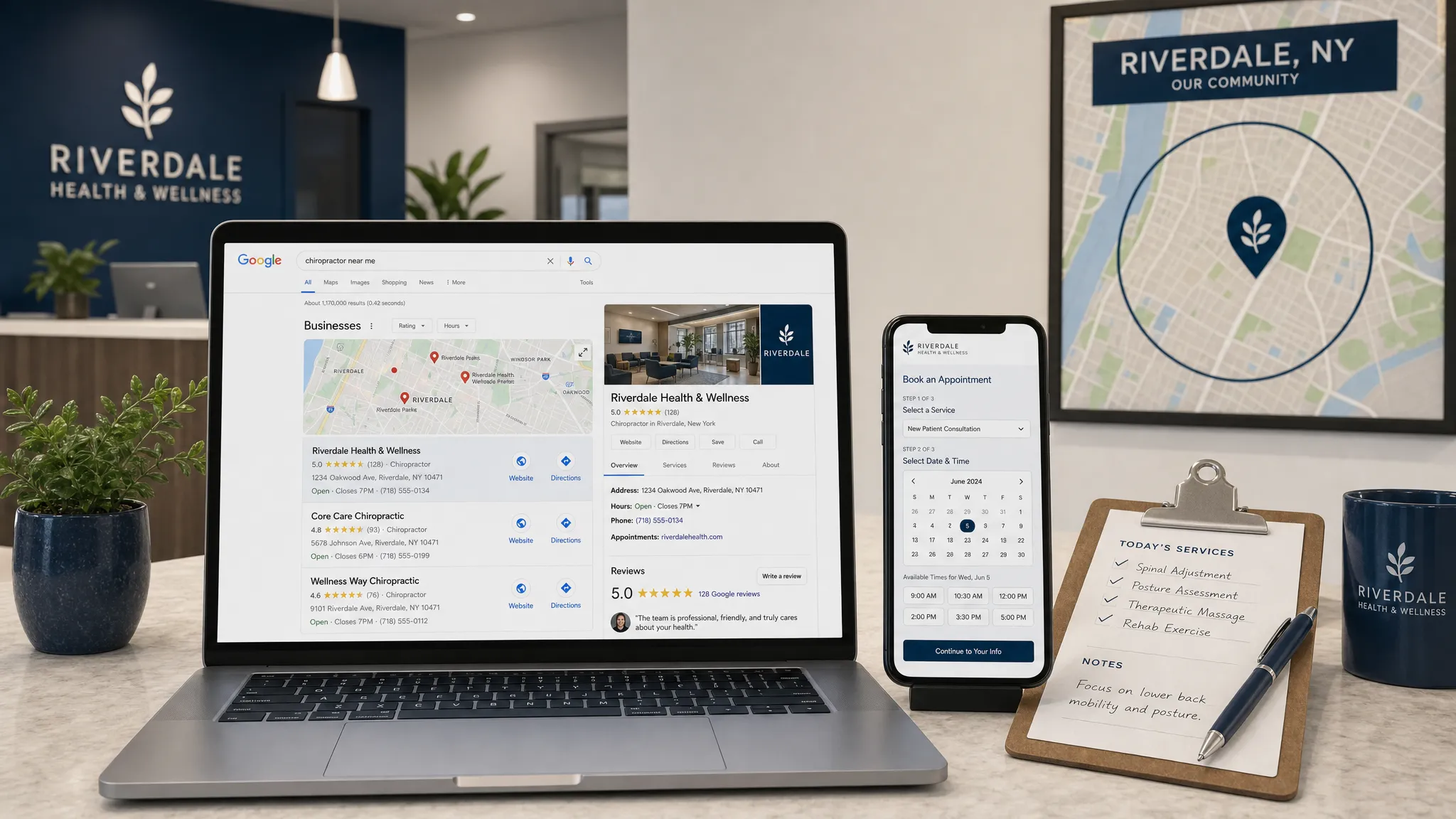
Patients rarely choose a healthcare practice from a billboard alone anymore. They search, compare, read reviews, check location, scan service pages, and decide whether a practice feels trustworthy enough to call or book online.
That is where SEO Louisville becomes a patient acquisition advantage. For dentists, orthodontists, optometrists, chiropractors, pain physicians, physical therapy clinics, and specialty practices, SEO is not just about ranking higher. It is about showing up when a local patient is actively looking for care and giving them enough confidence to take the next step.
A strong Louisville SEO strategy connects three things: local visibility, patient trust, and conversion. If any one of those is missing, rankings may look good on a report but still fail to fill the schedule.
What SEO Louisville Means for Healthcare Practices
SEO Louisville is the process of improving how a local practice appears in Google Search, Google Maps, and increasingly AI-powered search experiences for Louisville-area patients. It includes traditional website SEO, local SEO, Google Business Profile optimization, reviews, technical website improvements, content strategy, and conversion-focused page structure.
For healthcare practices, local SEO carries a higher trust burden than many other industries. Patients are not buying a t-shirt. They are choosing someone to examine their eyes, treat their pain, straighten their teeth, place an implant, or help them make a medical decision. That means the content must be accurate, the practice information must be consistent, and the website must make it easy to verify credentials, services, location, and next steps.
Google also evaluates local businesses through signals such as relevance, distance, and prominence, as explained in Google’s local ranking guidance. Healthcare practices cannot control a patient’s distance from the office, but they can improve relevance and prominence through better pages, stronger local signals, reviews, and a complete Google Business Profile.
| SEO asset | What it improves | Patient acquisition impact |
|---|---|---|
| Google Business Profile | Visibility in Maps and local results | More calls, directions requests, and appointment inquiries |
| Service pages | Relevance for procedures and conditions | More qualified patients finding the right treatment page |
| Location pages | Local relevance for specific areas | Better visibility for nearby patients and service areas |
| Reviews and reputation | Trust and prominence | Higher confidence before a patient calls |
| Technical SEO | Speed, crawlability, and mobile usability | Fewer lost visitors and stronger site performance |
| Content strategy | Education and authority | More opportunities to answer patient questions before competitors do |
Why Local Patients Search Before They Book
Most patients do not begin with a brand name. They begin with a problem, a symptom, a service, or a location. A Louisville parent might search for pediatric dentist near me. A runner in St. Matthews might search for sports injury chiropractor Louisville. A patient considering vision correction might search LASIK consultation Louisville. Someone with chronic back pain may compare pain management clinics before making a call.
These searches are valuable because they show intent. The patient is not casually browsing. They are trying to solve a real problem, often within a specific geography and timeline.
Local SEO helps your practice appear across multiple moments in that journey:
- When the patient searches by condition or symptom
- When they compare treatment options
- When they look for a provider near home or work
- When they read reviews to narrow the list
- When they return later to call, book, or request information
The goal is not to rank for every possible keyword. The goal is to rank for the searches that match your highest-value services and the types of patients your practice is best equipped to serve.
How SEO Turns Search Visibility Into More Patients
It captures high-intent local searches
The best SEO strategy starts with understanding how real patients search. A general dentistry practice may need visibility for preventive care, emergency dental visits, cosmetic dentistry, and dental implants. An optometry practice may need pages for eye exams, dry eye treatment, contact lenses, and pediatric vision care. A pain practice may need condition-focused content for back pain, joint pain, sciatica, or regenerative medicine.
Each search has different intent. Someone searching what causes jaw pain is still learning. Someone searching TMJ dentist Louisville is closer to choosing a provider. Someone searching emergency dentist open now is likely ready to call.
A good SEO plan maps these searches to the right pages instead of forcing every visitor to the homepage.
| Patient search type | Example intent | Best page or asset |
|---|---|---|
| Condition research | Why does my knee hurt when I run | Educational article or condition page |
| Treatment comparison | Invisalign vs braces Louisville | Treatment comparison page |
| Provider search | Optometrist near me | Google Business Profile and location page |
| Procedure search | Dental implants Louisville KY | Dedicated service page |
| Urgent need | Same-day chiropractor Louisville | High-converting service page and GBP updates |
It makes your Google Business Profile work harder
For many healthcare practices, the Google Business Profile is the first impression. Patients may see your profile before they ever reach your website. They see your name, star rating, review count, address, hours, photos, services, and call button.
That profile needs more than basic information. It should be actively maintained with accurate categories, complete service listings, updated hours, quality photos, appointment links when applicable, and review responses that protect patient privacy.
This is why Google Business Profile optimization and website SEO should work together. GBP can generate local calls quickly, while your website builds deeper authority for services, treatments, and patient education. If you are deciding where to focus first, Louisville Web Lab’s guide on Google Business Profile vs SEO explains how the two channels support each other.
It gives each service a page that can actually rank
One of the biggest SEO mistakes healthcare practices make is listing every service on one generic page. Google needs clear, specific content to understand what you offer, and patients need clear answers before they choose you.
A dental implant specialist should not rely on a short paragraph inside a services list. A dry eye clinic should not bury treatment options under a general eye care page. A chiropractic office that treats sports injuries, auto injuries, and chronic back pain should explain each service in a way that matches patient intent.
Good local pages are not unique to healthcare. A healthcare page needs that same clarity, with an added layer of medical accuracy, trust, and compliance.
For a practice page to perform well, it should usually answer the patient’s core questions: what the service is, who it helps, what to expect, why the provider is qualified, where the practice is located, and how to book.
It builds trust before the first call
Healthcare SEO is not only about keywords. It is also about trust signals.
Patients want to know whether your practice is credible, experienced, accessible, and a good fit. Search engines also benefit from clear signals that your site represents a real local practice with real expertise.
Trust-building elements may include provider bios, credentials, treatment explanations, patient-friendly FAQs, review highlights, office photos, insurance or payment information when appropriate, and clear contact options. For regulated healthcare fields, content should avoid exaggerated claims and should not replace professional medical advice.
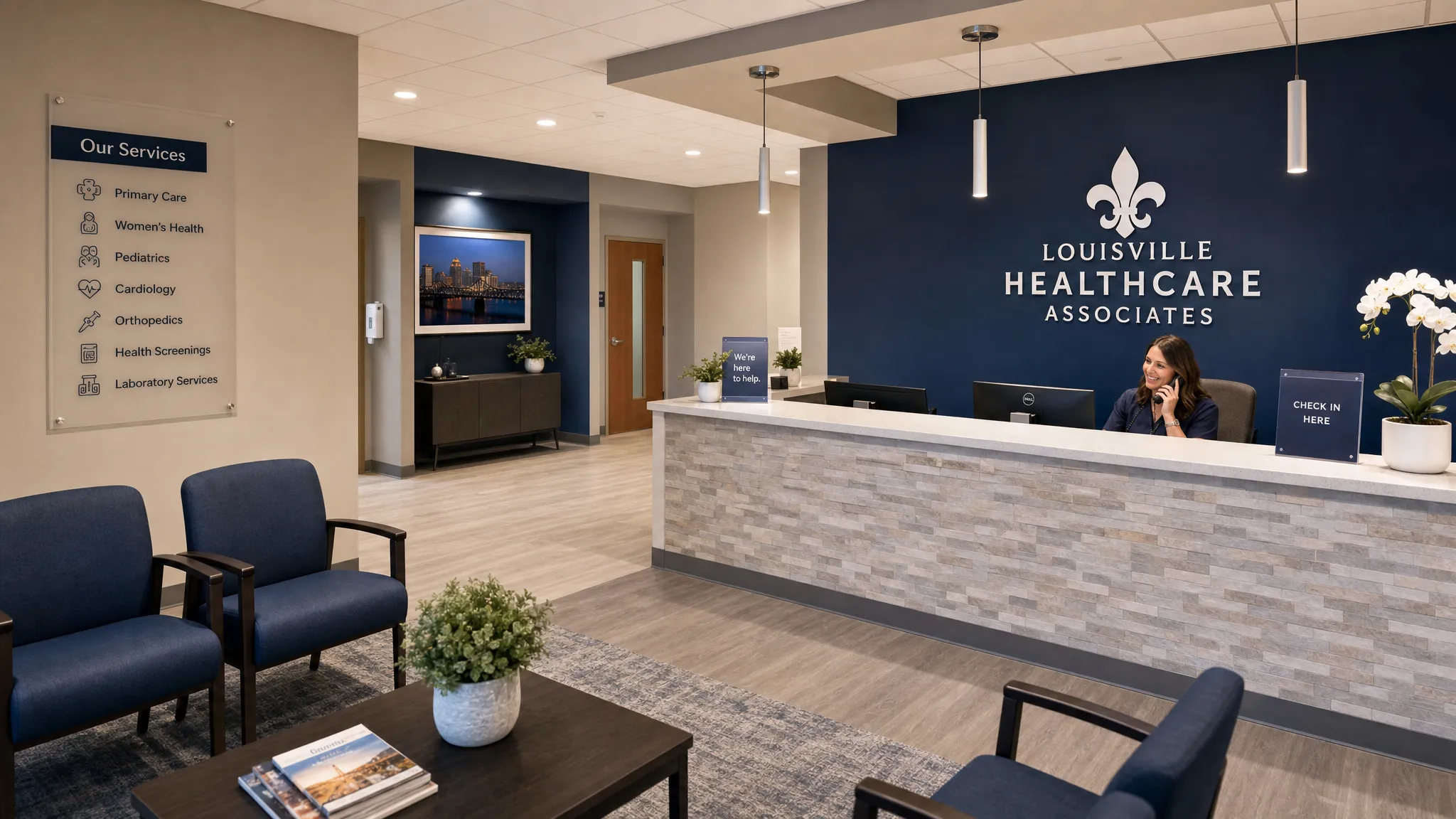
It reduces leakage after the click
Ranking is only the first step. If a patient clicks and cannot find the phone number, the page loads slowly, the form feels confusing, or the content does not match the search, that visitor may leave and choose another practice.
This is where SEO and conversion strategy overlap. A strong patient acquisition page should make the next step obvious. It should work well on mobile, load quickly, feature clear calls to action, and support fast follow-up.
For many practices, this is where marketing automation also matters. If a form submission sits unanswered for hours, the practice may lose the patient to a competitor. SEO gets the patient to the door. Follow-up systems help make sure the opportunity turns into a booked appointment.
What a Louisville Healthcare SEO Strategy Should Include in 2026
Local intent research
Keyword research for healthcare should go beyond volume. The right question is not just how many people search for a phrase. The better question is whether that phrase is likely to produce a qualified patient.
For example, a broad term like back pain may attract national informational traffic. A more local and specific phrase like back pain clinic Louisville or chiropractor for sciatica Louisville is more likely to connect with someone seeking care nearby.
A strong strategy prioritizes service lines, payer mix considerations when relevant, patient geography, competition, and appointment value. The result is a content plan that supports growth, not just traffic.
Google Business Profile optimization
Your GBP should accurately reflect your practice categories, services, hours, address, phone number, website, appointment link, and photos. If you operate multiple locations, each location needs its own accurate profile and location-specific signals.
Review management is also critical. Consistent, ethical review generation can improve patient confidence and support local prominence. Responses should be professional and should avoid revealing protected health information.
Location and service page structure
A Louisville practice may serve patients from multiple neighborhoods and nearby communities. Depending on the specialty, your real patient draw might include areas like the Highlands, St. Matthews, Middletown, Jeffersontown, Prospect, New Albany, Jeffersonville, or Shepherdsville.
That does not mean creating thin copy-and-paste pages for every ZIP code. It means building genuinely useful location and service content where there is a real business case and enough unique information to help patients.
The best pages are specific, helpful, and conversion-focused. They explain the service, the patient fit, the process, the location, and the next step.
Technical SEO and site performance
Technical SEO is easy to overlook because patients do not see crawl errors or schema markup. But they do feel the effects of poor performance. Slow load times, broken pages, confusing navigation, and mobile issues create friction.
Technical SEO for healthcare practices often includes improving page speed, fixing broken links, cleaning up duplicate pages, organizing site architecture, adding structured data where appropriate, improving internal linking, and making sure Google can crawl and understand the site.
A technically sound website gives your content a better chance to rank and gives patients a better experience once they arrive.
Reputation and review systems
Reviews affect both search behavior and patient decision-making. A practice with strong reviews, recent feedback, and thoughtful responses can earn trust faster than a competitor with an outdated or neglected profile.
The key is consistency. Practices should build review requests into normal post-visit workflows, make the process simple, and train staff on compliant language. They should also respond to reviews in a way that is helpful without confirming whether someone is a patient or discussing treatment details.
AI search readiness
Search is changing. Google results may include AI-generated summaries, and patients may ask AI assistants for local recommendations. That does not replace SEO. It raises the bar for clear entity information, authoritative content, consistent business data, and strong local reputation signals.
Practices that want to stay visible in AI-assisted search should focus on content that is specific, trustworthy, well-structured, and aligned with real patient questions. Louisville Web Lab has also covered how AI is changing search in its guide to AI Overviews and Google Search.
How Long Does SEO Take for Louisville Practices?
SEO is a compounding channel. Some improvements, especially Google Business Profile updates and technical fixes, can create movement quickly. Competitive service rankings usually take longer because Google needs time to crawl changes, evaluate content, observe engagement, and compare your site against other local providers.
| Timeframe | Typical focus | What a practice may see |
|---|---|---|
| First 30 days | Audit, tracking, GBP cleanup, technical fixes | Better measurement and corrected local signals |
| 30 to 90 days | Service pages, citations, review system, on-page SEO | Early ranking movement and improved page relevance |
| 3 to 6 months | Content expansion, authority building, conversion refinement | More non-branded visibility and qualified inquiries |
| 6 to 12 months | Ongoing optimization and market expansion | Stronger local authority and more predictable lead flow |
The timeline depends on competition, website condition, review profile, content quality, and how aggressively the practice invests. A brand-new specialty clinic in a competitive metro area may need more time than an established practice with a strong reputation but poor website structure.
For budget planning, the guide on SEO cost in Louisville explains what typically affects pricing and scope.
What to Measure Besides Rankings
Rankings matter, but they are not the whole story. A healthcare practice should evaluate SEO based on whether it contributes to patient growth.
Useful metrics include Map Pack visibility, calls from Google Business Profile, appointment form submissions, call quality, service page conversion rates, non-branded organic traffic, review volume, direction requests, and booked appointments attributed to organic search.
For practices that invest in both SEO and Google Ads, attribution becomes even more important. A patient may first discover the practice through an organic article, return through a branded search, click a Google Ad later, and then call from the website. Looking at only the last click can hide the role SEO played in creating trust.
Common SEO Mistakes That Cost Practices Patients
Many practices do some SEO, but not enough of the right work to move patient acquisition. The most common problems are usually strategic, not technical.
A practice may have a beautiful website with weak service pages. Another may rank for the practice name but not for treatment searches. Some profiles have outdated hours, inconsistent phone numbers, or too few recent reviews. Others publish generic blog content that could apply to any clinic in any city.
The biggest mistake is treating SEO as a checklist instead of a system. The system should connect visibility, trust, conversion, follow-up, and reporting. Without that connection, traffic can increase while appointments stay flat.
Why Specialized Healthcare SEO Matters
A general SEO provider may understand keywords and backlinks, but healthcare practices need more than generic local marketing. They need content that respects medical accuracy, reputation systems that protect privacy, conversion paths that match patient behavior, and tracking that focuses on booked appointments instead of vanity metrics.
Louisville Web Lab focuses on healthcare practice marketing for dental, vision, pain, physical therapy, primary care, and specialty practices. That matters because patient acquisition is different from selling a simple local service. The decision cycle, trust requirements, compliance concerns, and appointment workflow all shape the SEO strategy.
An effective campaign may combine local SEO, Google Business Profile optimization, website design, conversion landing pages, reputation and reviews, Google Ads, automation, and AI search optimization. The right mix depends on the practice, competition, and growth goals.
For a broader view of how these channels work together, read Louisville Web Lab’s guide to healthcare practice marketing strategies that fill schedules.
Frequently Asked Questions
What does SEO Louisville mean for a healthcare practice? It means optimizing your website, Google Business Profile, reviews, local content, and technical foundation so Louisville-area patients can find your practice when they search for relevant services, treatments, or providers.
How long does it take for SEO to bring in new patients? Some local improvements can help within weeks, especially Google Business Profile updates, but competitive service rankings often take 3 to 6 months or longer. SEO works best as a long-term patient acquisition channel.
Is Google Business Profile more important than website SEO? Both matter. Google Business Profile often drives faster local calls from Maps, while website SEO builds deeper authority for services, locations, and patient education. The strongest strategy uses both together.
Can SEO help specialty practices, not just general dentists or chiropractors? Yes. Specialty practices often benefit from SEO because patients search for specific procedures, conditions, and provider types. The key is building accurate, high-intent pages around the services patients are actively researching.
Should a practice invest in SEO or Google Ads first? It depends on goals and timeline. Google Ads can create faster visibility for high-intent searches, while SEO builds durable organic visibility over time. Many growing practices use both, with ads supporting immediate demand while SEO compounds.
Turn Local Searches Into Booked Appointments
If your practice is showing up inconsistently on Google, ranking for the wrong terms, or getting traffic that does not turn into appointments, the problem may not be SEO alone. It may be the connection between visibility, trust, website conversion, and follow-up.
Louisville Web Lab helps healthcare practices build patient acquisition systems using SEO, Google Ads, websites, automation, reviews, and conversion-focused strategy. If you want to see where your practice is losing patients online and what to fix first, book a diagnostic strategy call.