
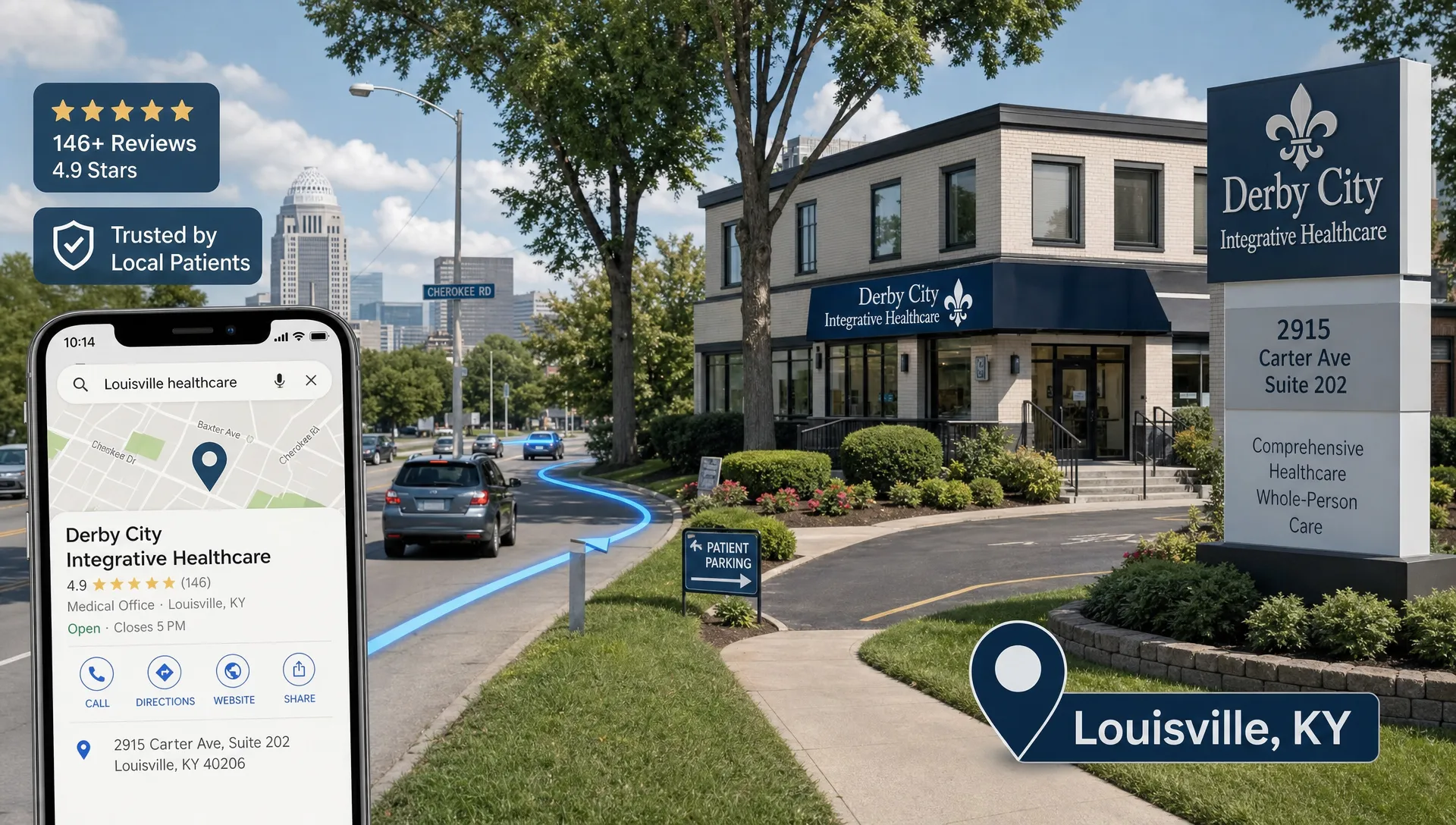
Choosing a website partner is not just a design decision. For a healthcare practice, it can affect how many patients find you, how much they trust you before they call, and whether your marketing budget turns into booked appointments.
That is why choosing a web design company in Louisville requires a different lens than hiring someone to build a basic brochure site. A dentist in St. Matthews, an optometrist in Jeffersontown, a chiropractor in Middletown, and a pain management clinic serving Southern Indiana all need more than clean visuals. They need a website that supports local visibility, patient confidence, conversion, and measurable growth.
The right partner should understand both the Louisville market and the way patients evaluate healthcare decisions online. This guide will help you compare options, ask better questions, and avoid common mistakes before you sign a contract.
Start with the real goal: more qualified patient opportunities
Many practices begin the web design process by focusing on colors, layouts, logos, or competitor sites they like. Those details matter, but they should come after the business strategy.
A healthcare website should answer four practical questions:
| Question | Why it matters for a healthcare practice |
|---|---|
| Can local patients find you? | Your site should support Google visibility for treatments, services, and locations. |
| Do patients trust you quickly? | Visitors need clear provider information, service explanations, proof points, and a professional experience. |
| Is it easy to take action? | Calls, appointment requests, directions, and forms should be obvious on mobile and desktop. |
| Can performance be measured? | You should know which pages, channels, and campaigns lead to calls or form submissions. |
A beautiful website that does not help patients take the next step is not a growth asset. It is a digital business card. For most healthcare practices, the better goal is a site that works as the center of your patient acquisition system.
Look for healthcare and local market experience
A general web designer may be able to build an attractive site, but healthcare has unique requirements. Patients are often anxious, skeptical, time constrained, or comparing several providers at once. They want answers before they contact your office.
For example, a dental implant patient may need reassurance about the process, candidacy, financing conversations, and provider experience. A dry eye patient may be looking for symptoms and treatment options. A chiropractic or physical therapy patient may want to know whether you treat their specific condition and whether your office is convenient from work or home.
A strong Louisville web design partner should be able to discuss:
- How patients search for your specialty in Louisville and surrounding areas
- How service pages should be structured for local SEO and conversion
- How to build trust without overloading the site with medical jargon
- How website forms, calls, and follow-up processes affect appointment volume
- How your site fits with Google Ads, reviews, Google Business Profile, and automation
This does not mean the agency must only serve healthcare practices, but it should be able to show that it understands healthcare buying behavior. If you want a deeper framework for combining website strategy with search visibility, Louisville Web Lab also explains how healthcare practices should choose an SEO and web design company.
Evaluate strategy before you evaluate design taste
Portfolios are useful, but they can be misleading. A site can look polished in a screenshot and still be slow, confusing, thin on content, or difficult to update.
Before reviewing mockups, ask the company how it decides what your site needs. A serious web design process should include discovery around your services, ideal patients, competitive market, current website performance, local search opportunities, and conversion goals.
A practical strategy conversation should cover questions like these:
- Which services are most profitable or most important to grow?
- Which locations or neighborhoods matter most to your practice?
- What types of patients are you trying to attract or filter out?
- What objections do patients usually have before booking?
- Which calls to action should be primary on each page?
- How will success be tracked after launch?
If the conversation jumps straight to templates, colors, or homepage animations, that is a warning sign. Design should support the patient journey, not distract from it.
Make sure local SEO is part of the build
For most healthcare practices, the website and local SEO cannot be separated. Patients often search for phrases like “dentist near me,” “orthodontist Louisville,” “eye doctor Highlands,” or “chiropractor near St. Matthews.” Your site helps Google understand what you do, where you do it, and which pages deserve to appear for relevant searches.
A good web design company should understand the basics of technical SEO, page structure, internal linking, location relevance, service page depth, and Google Business Profile support. Google’s own SEO Starter Guide emphasizes creating helpful, reliable content and making pages easy for search engines and users to understand.
For a healthcare practice, that usually means every core service needs a useful page, not just a short bullet on a services menu. It also means your site should have clear page titles, descriptive headings, optimized metadata, fast performance, logical navigation, and accurate practice information.
Local SEO should be planned before the site launches. Retrofitting it later often costs more and can delay results.
Prioritize conversion, not just traffic
Getting more visitors is only helpful if the right visitors contact the practice. Conversion strategy is the bridge between visibility and revenue.
For healthcare websites, conversion often depends on clarity and confidence. Patients want to know what you treat, who will treat them, whether your office feels credible, and what to do next. They may also be comparing your practice against hospital systems, corporate dental groups, national chains, or other private practices.
Your web design company should be able to explain how it will improve conversion through page layout, messaging, mobile usability, calls to action, trust signals, and contact options.
| Conversion element | What to look for |
|---|---|
| Mobile call buttons | Easy tap-to-call access for patients who are ready to schedule. |
| Appointment requests | Simple forms that ask only for necessary information. |
| Service-specific CTAs | Calls to action that match the page, such as consultation requests or new patient appointments. |
| Trust signals | Provider bios, reviews, credentials, before-and-after guidance where appropriate, and patient-friendly explanations. |
| Clear next steps | Patients should understand what happens after they call or submit a form. |
This is especially important if you run Google Ads. Paid traffic sent to a weak website or generic page can waste budget quickly. Conversion landing pages, tracking, and follow-up systems should be part of the conversation.
Ask about privacy, compliance, and accessibility
Healthcare websites often collect sensitive information, even when the practice does not intend to. A contact form that asks about symptoms, insurance, or treatment needs may create privacy concerns if it is not handled correctly.
Your web design company does not replace legal counsel or your compliance officer, but it should understand that healthcare sites require care around forms, analytics, tracking tools, testimonials, images, and patient information. The U.S. Department of Health and Human Services provides official guidance on the HIPAA Privacy Rule, and practices should review how their website tools handle protected health information.
Accessibility also matters. Patients with visual, motor, or cognitive limitations may need to use your website to find care. The Web Content Accessibility Guidelines are a widely recognized framework for making web content more accessible. At minimum, ask about readable text, color contrast, keyboard navigation, form labels, alt text, and clear page structure.
Understand the company’s process
A reliable process reduces surprises. It also helps your team know when feedback is needed, what assets to prepare, and how long each stage may take.
A typical professional process includes discovery, sitemap planning, content strategy, design, development, review, testing, launch, and post-launch monitoring. The exact timeline depends on the size of your site, the number of locations, the amount of content, and whether SEO, ads, or automation are included.
If you want to know what a structured local build can look like, review this overview of the Louisville web design process before you compare proposals.
When speaking with vendors, pay attention to how they manage communication. Do they explain tradeoffs clearly? Do they document scope? Do they ask smart questions about your practice? Do they have a plan for launch day? A good process is not bureaucracy. It is how the project stays aligned with your goals.
Compare proposals by scope, not just price
Website pricing can vary widely because “web design” can mean many different things. One proposal may include strategy, copywriting, SEO planning, conversion tracking, landing pages, and launch support. Another may only include a visual redesign.
Instead of choosing the cheapest or most expensive option by default, compare what is actually included.
| Proposal category | Questions to ask |
|---|---|
| Strategy | Is there research into competitors, services, local search, and patient intent? |
| Content | Who writes or edits the copy, and will it be specific to your services? |
| SEO | Are page structure, metadata, technical SEO, and local relevance included? |
| Development | Is the site built for speed, mobile usability, security, and easy updates? |
| Tracking | Will calls, forms, and important events be measured? |
| Ownership | Who owns the website, content, domain, analytics, and ad accounts? |
| Support | What happens after launch if something breaks or needs improvement? |
A low-cost site can become expensive if you later need to rebuild it, rewrite the content, fix SEO issues, or add tracking that should have been included from the beginning.
Watch for red flags before you sign
Not every bad fit is obvious at first. Some companies sell attractive designs but have little interest in patient acquisition. Others promise rankings, leads, or timelines that are unrealistic.
Use this table to spot issues early:
| Red flag | Why it matters |
|---|---|
| “We can guarantee page one rankings” | No agency controls Google, and guarantees can encourage risky tactics. |
| No discussion of calls or appointment requests | Traffic without conversion tracking leaves you guessing. |
| One-page site for a multi-service practice | Important treatments usually need dedicated pages to rank and convert. |
| No mobile-first planning | Many patients search and call from mobile devices. |
| Vague ownership terms | You should know who controls your domain, content, hosting, analytics, and ad accounts. |
| No healthcare awareness | Forms, claims, testimonials, and tracking tools require extra care in healthcare. |
| Design-first discovery | Visuals should follow strategy, not replace it. |
A trustworthy web design company will be comfortable explaining limitations. They will not pretend a new website alone can fix every marketing issue overnight.
Consider how the website will support future marketing
Your website should not be treated as a one-time project that sits untouched for three years. Search behavior changes. Competitors update their sites. New services become priorities. Google Ads campaigns need better landing pages. Reviews and reputation signals evolve.
The best website decisions make future marketing easier. That includes building flexible service pages, organizing content logically, setting up tracking properly, and making the site easy to improve over time.
For healthcare practices, it is also worth considering how the website connects with:
- Google Business Profile optimization
- Reputation and review generation
- Google Ads campaigns
- Service line growth
- Patient reactivation or follow-up automation
- AI search visibility and answer-style content
If you are comparing broader marketing partners, this guide on how to choose a healthcare marketing agency in Louisville can help you evaluate whether web design should be part of a larger growth strategy.
Use a simple scorecard to choose your finalist
When you are comparing several companies, it helps to score them objectively. This keeps the decision from becoming only about personality, price, or portfolio preference.
| Evaluation area | Score from 1 to 5 | What a strong score looks like |
|---|---|---|
| Healthcare understanding | They understand patient intent, trust, privacy, and specialty-specific decisions. | |
| Local SEO knowledge | They can explain how the site supports Louisville search visibility. | |
| Conversion strategy | They focus on calls, appointment requests, and patient actions. | |
| Content quality | They plan useful service pages, not generic filler copy. | |
| Technical quality | They address speed, mobile usability, accessibility, security, and testing. | |
| Measurement | They define how leads, calls, forms, and campaigns will be tracked. | |
| Communication | They provide a clear process, scope, timeline, and ownership terms. | |
| Long-term fit | They can support improvements after launch, not just the initial build. |
The best choice is usually the company that understands your growth goals, communicates clearly, and can connect design decisions to measurable patient behavior.
Frequently Asked Questions
How do I choose the best web design company in Louisville for a healthcare practice? Start by looking for healthcare awareness, local SEO knowledge, conversion strategy, clear ownership terms, and measurable tracking. A strong partner should ask about your services, patients, locations, and appointment goals before discussing design preferences.
Should my web design company also handle SEO? In most cases, yes, or it should work closely with your SEO partner. Website structure, content, speed, internal links, and technical setup all affect search visibility. Separating design from SEO can lead to a site that looks good but performs poorly.
What should a healthcare website include? Most practices need clear service pages, provider information, location details, reviews or trust signals, mobile-friendly calls to action, appointment request options, privacy-conscious forms, and analytics or call tracking. The exact structure depends on your specialty and growth goals.
How long does a healthcare website project take? Timelines vary based on site size, content needs, approvals, integrations, and revisions. A small refresh may move faster than a multi-location website with new copy, SEO planning, and conversion tracking. Ask each company for a realistic timeline tied to your specific scope.
Is the cheapest website proposal a bad idea? Not always, but it deserves careful review. A cheaper proposal may exclude copywriting, SEO, tracking, testing, or post-launch support. Compare scope line by line so you understand the true cost of getting a site that can support patient growth.
Ready to choose a website partner with confidence?
If you are evaluating a web design company in Louisville for a dental, vision, chiropractic, pain, physical therapy, primary care, or specialty practice, focus on more than the homepage. Look for a partner who can connect design, SEO, conversion, and patient acquisition.
Louisville Web Lab helps healthcare practices grow through websites, local SEO, Google Ads, automation, reviews, landing pages, and patient acquisition systems. If you want a clearer view of what your current website is doing well and what may be costing you appointments, book a diagnostic call with Louisville Web Lab.