

Google Maps is often the front door to a healthcare practice. Before a patient compares websites, reads provider bios or checks insurance details, they usually see three local results in the Google Map Pack. For searches like dentist near me, optometrist St. Matthews, chiropractor Louisville KY or pain clinic near me, those map results can drive calls, directions and appointment requests before the patient ever scrolls.
For Louisville healthcare practices, Google Maps SEO is not just about ranking higher. It is about helping the right patient choose the right office with accurate information, strong trust signals and a clear path to book. This checklist is built for dental, orthodontic, optometry, chiropractic, pain management, physical therapy and specialty medical practices that want more qualified local visibility without cutting corners.
Google explains that local rankings are primarily based on relevance, distance and prominence. You cannot control where a patient is searching from, but you can improve how clearly Google understands your practice and how trustworthy your local presence appears.
The Google Maps SEO checklist at a glance
Use this as a quarterly audit. If your practice has multiple locations, complete the checklist for each office because every profile, landing page and review profile can perform differently.
| Checklist area | What to confirm | Suggested cadence |
|---|---|---|
| Profile ownership | The practice controls the Google Business Profile and agency access is limited to manager roles | Twice per year |
| Business category | Primary and secondary categories match the actual healthcare service | Quarterly |
| Name, address and phone | NAP is consistent across Google, website, directories and insurance profiles | Quarterly |
| Hours and appointment links | Regular hours, holiday hours, phone numbers and booking links are correct | Monthly |
| Services | High-intent services are listed accurately in the profile and supported on the website | Quarterly |
| Photos | Recent exterior, interior, team and accessibility photos are uploaded | Monthly |
| Reviews | Review requests, responses and policy compliance are actively managed | Weekly |
| Citations | Core healthcare directories and local listings are accurate | Twice per year |
| Local authority | The practice earns legitimate Louisville mentions and relevant backlinks | Ongoing |
| Measurement | Calls, direction requests, bookings and conversion rates are tracked | Monthly |
1. Confirm profile ownership and access
A Google Maps SEO campaign starts with control. Your Google Business Profile should be owned by an account the practice controls, not a former employee, outside vendor or personal Gmail account that no one monitors.
The safest setup is usually one practice-controlled primary owner, then manager access for marketing partners and internal staff. This protects the listing if your practice changes agencies, hires new front desk staff or opens another location. Google also has detailed Business Profile guidelines that cover eligible businesses, address rules, names and other basics that can prevent suspensions.
If you are still creating or reclaiming the listing, Louisville Web Lab has a practical walkthrough on how to set up a Google Business Page for local SEO. Start there before making advanced changes.
2. Choose the most accurate primary category
The primary category is one of the strongest relevance signals in your Google Business Profile. It tells Google what your practice is. A dental implant center, pediatric dentist, orthodontist, optometrist, chiropractor and pain management clinic should not all use generic healthcare categories if more specific options are available.
For example, a general dental office may use Dentist as the primary category, while an orthodontic practice may use Orthodontist. An eye care practice may choose Optometrist or Ophthalmologist depending on the licensed service model. A physical therapy clinic should not choose a broader medical category if Physical therapist or a related category better describes the practice.
Secondary categories can help when they reflect real services, but they should not become a wish list. Adding unrelated categories can confuse Google and attract poor-fit calls. If a Louisville practice offers both chiropractic care and physical therapy under one roof, the profile should match the real business structure, licensing and patient experience.
3. Keep the practice name, address and phone consistent
Your business name should match your real-world practice name, signage, website and legal branding. Adding extra phrases like best dentist in Louisville or top pain doctor near me to the Google Business Profile name may look tempting, but it violates Google guidelines unless those words are part of the actual business name.
Address accuracy matters just as much. Include the correct suite number, building name when relevant and a local phone number patients can reach. If you use call tracking, configure it carefully so tracking does not create inconsistent citations across the web. Many practices use a tracking number as the primary number in Google Business Profile while keeping the main office number as an additional number, but the setup should be documented and checked regularly.
Hours are another common source of lost patients. Update holiday hours, lunch closures, Saturday availability and special schedules. A patient who drives to a clinic listed as open and finds a locked door may not give the practice a second chance.
4. Match services to high-intent patient searches
Google Maps SEO works best when your profile, website and patient demand line up. The services section of your Google Business Profile should use plain language that patients actually search, not only clinical terminology.
A periodontist might include dental implants, gum disease treatment and gum grafting. A dry eye clinic may list dry eye treatment, contact lens exams and emergency eye care if those services are truly offered. A chiropractic office may include back pain treatment, neck pain care and auto injury care, while staying careful not to promise outcomes.
| Practice type | High-intent services to review | Website support to create |
|---|---|---|
| General dentistry | New patient exams, emergency dentistry, crowns, cleanings | Service pages with symptoms, insurance notes and booking options |
| Orthodontics | Braces, Invisalign, retainers, teen orthodontics | Treatment pages, age-specific content and consultation calls to action |
| Optometry | Eye exams, dry eye, contact lenses, pediatric eye care | Condition pages, exam details and accepted insurance guidance |
| Chiropractic | Back pain, neck pain, auto injuries, sports injuries | Location-aware service pages and clear first-visit expectations |
| Pain management | Sciatica, joint pain, injections, regenerative medicine | Clinically reviewed pages with candidacy and referral details |
| Physical therapy | Post-surgery rehab, sports rehab, balance therapy | Pages that explain treatment plans, referral needs and scheduling |
The goal is not to stuff keywords into every field. The goal is to make it easy for Google and patients to understand what you do, who you help and where appointments happen.
5. Connect the profile to a location page built to convert
Your Google Business Profile should link to the most relevant page on your website. For a single-location practice, that may be the homepage if it clearly covers location, services and booking. For a multi-location group, each profile should usually link to its own location page.
A strong healthcare location page includes the practice name, address, phone number, hours, appointment options, parking details, provider information, service links, accepted insurance guidance and patient trust signals. It should also load quickly on mobile because many map users are searching from a phone.
For a deeper look at local ranking factors, Louisville Web Lab's guide on how to rank in the Louisville Map Pack explains how relevance, distance and prominence apply to local practices. Pair that with a conversion-focused website, because a map ranking that sends patients to a confusing page will waste hard-earned visibility.
6. Build a compliant review system
Reviews influence both patient trust and local visibility. Google states that more reviews and positive ratings can improve local ranking, but healthcare practices need a review process that respects privacy and avoids manipulation.
Ask consistently, not selectively. A front desk team, follow-up email or patient automation system can invite patients to share feedback after an appointment, but the practice should not only ask patients who seem happy. Do not offer discounts, gifts or clinical benefits in exchange for reviews.
Healthcare review responses require extra care. Even if a patient publicly mentions a diagnosis or procedure, the practice should not confirm that the person is a patient or discuss care details. The HHS HIPAA Privacy Rule overview is a useful reference for understanding protected health information. In practice, keep responses general and move sensitive conversations offline.
| Review task | Better approach | Risky approach |
|---|---|---|
| Asking for reviews | Invite all eligible patients through a neutral request | Only asking patients who praise the staff |
| Responding to praise | Thank the reviewer without confirming treatment details | Mentioning the service, diagnosis or appointment type |
| Responding to complaints | Acknowledge feedback and ask them to contact the office | Debating clinical details in public |
| Improving review velocity | Build review requests into normal check-out or follow-up workflows | Buying reviews or offering incentives |
A simple HIPAA-conscious response might be: Thank you for sharing your feedback. We appreciate hearing from our community. Please contact our office directly if there is anything we can help with.
7. Upload useful, current photos
Photos help patients feel more comfortable before they visit. For healthcare, this is especially important because patients may be anxious about cost, treatment, pain, parking, accessibility or whether the office is a good fit for a child or older family member.
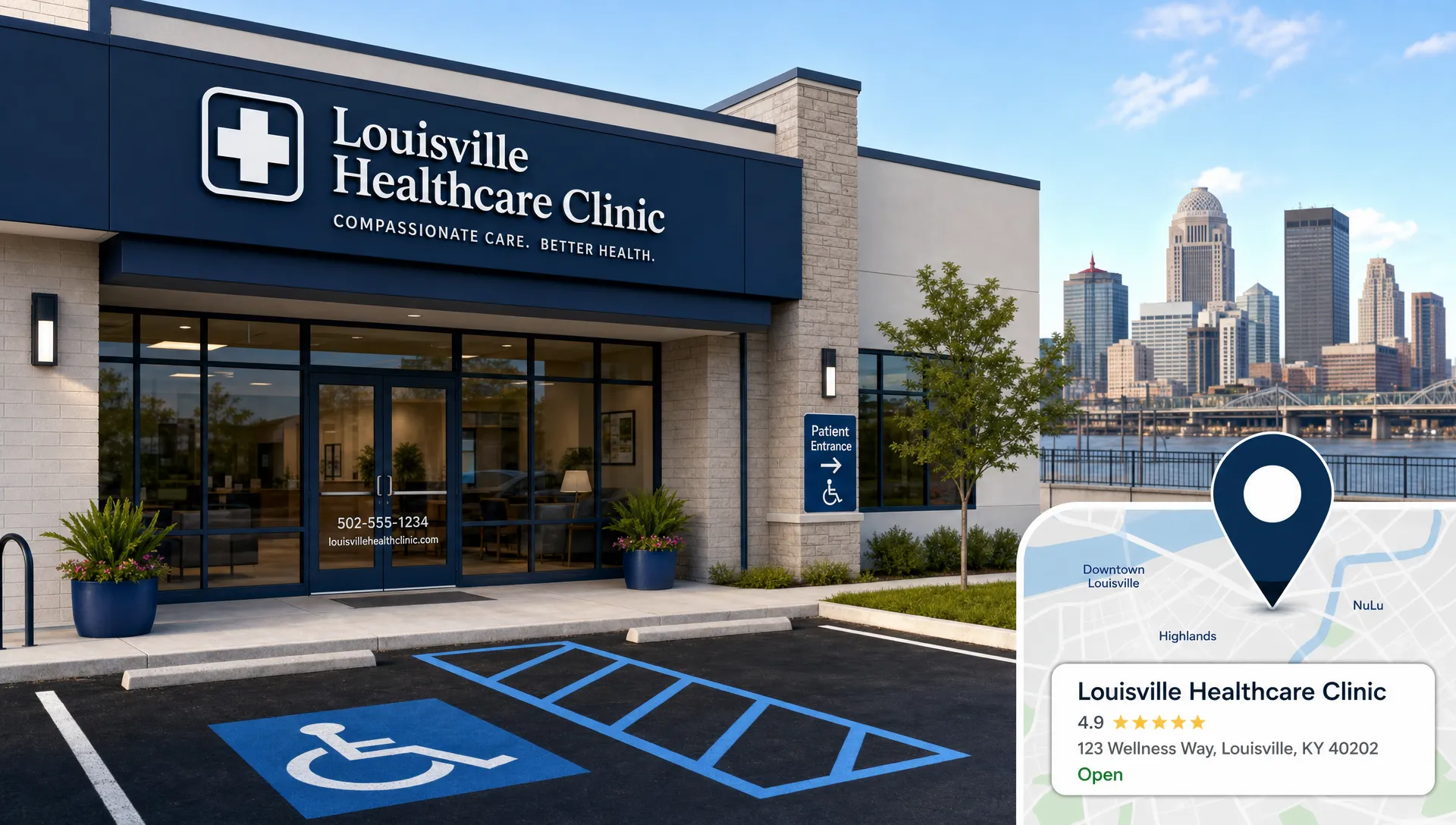
Upload real photos of the exterior, entrance, reception area, treatment rooms without patients, provider headshots, team members, parking areas and accessibility features. If your office is in a larger medical building, include photos that help patients find the right entrance and suite.
Avoid stock photos that look disconnected from the actual practice. Also avoid posting any image that includes a patient unless you have proper written consent and understand how the image may be used. A monthly photo habit is enough for many practices, especially when paired with seasonal updates, new provider announcements or renovated areas.
8. Clean up citations and healthcare directories
Google Maps SEO does not happen only inside Google. Your practice information appears across directories, data aggregators, insurer pages, healthcare platforms and local websites. Inconsistent listings can confuse patients and weaken trust.
Start with the most visible places: your website, Google Business Profile, Apple Business Connect, Bing Places, Yelp, Facebook, Healthgrades, WebMD, Zocdoc if you use it, NPI records where applicable, insurance directories and local chamber or association listings. The exact list depends on your specialty and referral model.
The key is consistency. Use the same practice name, address format, primary phone number and website URL wherever possible. If your practice moved, rebranded or changed phone systems, citation cleanup should be a priority before you invest heavily in new content.
9. Strengthen Louisville-specific prominence
Prominence is partly about how well-known and trusted your practice appears online. For a Louisville healthcare practice, that trust should come from real local activity, not artificial link schemes.
Good local prominence signals can include mentions from Louisville nonprofits you support, schools or sports programs you sponsor, professional associations, local news features, community events, referral partners and legitimate healthcare directories. A pediatric dental practice sponsoring an elementary school event, an optometry clinic participating in a vision screening initiative or a physical therapy group supporting a local race may earn mentions that reflect real community involvement.
Neighborhood relevance can help too, but it must be honest. If your office is in Middletown, it is reasonable to explain that you serve patients from Jeffersontown, Douglass Hills and East Louisville. It is not useful to create dozens of thin pages claiming you have offices in neighborhoods where you do not operate.
10. Measure calls, bookings and patient quality, not rankings alone
Rankings matter, but they are not the whole scorecard. A practice can rank well and still lose patients if calls go unanswered, the website loads slowly or the appointment form is hard to use. Google Maps SEO should be measured through the full path from visibility to booked patient.
Use UTM parameters on your website link and appointment link so traffic from your Google Business Profile can be separated in analytics. Compare that data with call tracking, form submissions and your practice management system when possible. Google Business Profile performance data is useful, but it should not be the only source of truth.
| Metric | Where to review it | What it tells you |
|---|---|---|
| Map views and search terms | Google Business Profile performance | Whether visibility is growing for relevant searches |
| Calls from profile | GBP performance and call tracking | Whether map visibility is creating phone demand |
| Direction requests | GBP performance | Whether nearby patients are considering a visit |
| Website clicks | GBP performance and analytics | Whether patients need more information before booking |
| Appointment conversions | Website analytics and booking data | Whether traffic turns into scheduled care |
| New patient source quality | Front desk notes or CRM data | Whether leads match the practice's ideal services |
If you are working with an agency, ask them to report on outcomes instead of rank screenshots alone. Louisville Web Lab explains this further in its article on how a Louisville SEO company should measure success.
A practical 30-day cleanup plan
A full local SEO campaign takes time, but many healthcare practices can fix major Google Maps issues in the first month.
Week 1: Confirm ownership, remove outdated users, verify the correct category, fix the business name and check the address, phone number, hours and appointment links.
Week 2: Update services, add fresh photos, review the profile description and make sure the linked website page supports your top patient searches.
Week 3: Audit reviews, create a compliant review request workflow, draft safe response templates and train the front desk team on when to move conversations offline.
Week 4: Clean up top citations, add UTM tracking, review call handling data and build a monthly reporting dashboard focused on calls, appointments and new patient quality.
After that first month, shift into maintenance. Google Maps SEO rewards consistent accuracy, trust-building and patient engagement more than one-time edits.
Frequently Asked Questions
How long does Google Maps SEO take for a Louisville healthcare practice? Foundational fixes can improve accuracy quickly, but meaningful visibility gains often take several months. Timing depends on competition, location, review profile, website quality, category accuracy and how established nearby competitors are.
Can a practice rank in the Map Pack outside its immediate neighborhood? Sometimes, but proximity matters. A practice in St. Matthews may have a stronger chance for searches nearby than searches across the county. You can improve relevance and prominence, but you cannot fully overcome distance for every search.
Should each provider have a separate Google Business Profile? Google allows some individual practitioner profiles when the provider is public-facing and meets eligibility rules, but unmanaged provider listings can compete with the main practice listing. Multi-provider practices should create a strategy before adding or changing practitioner profiles.
Do reviews really affect Google Maps rankings? Yes, reviews can influence local visibility and patient decisions. Google specifically references review count and score as part of local ranking prominence, but review quality, recency and compliant responses also matter for conversion.
Is Google Maps SEO different for dentists, optometrists, chiropractors and pain clinics? The ranking principles are similar, but the execution differs. Categories, services, review language, compliance concerns, website content and patient decision factors vary by specialty.
Turn the checklist into more booked appointments
If your profile is accurate but still not producing enough calls, the issue may be bigger than one listing field. Google Maps performance depends on local SEO, reviews, website conversion, call handling and patient follow-up working together.
Louisville Web Lab helps dental, vision, pain, physical therapy and specialty practices improve search visibility and turn that visibility into measurable patient growth. If you are comparing Louisville Map Pack SEO services for healthcare practices, start with a diagnostic call and use this checklist as the baseline for what needs to improve next.