

For clinics, Google Ads is not just a traffic channel. It is a demand capture system that should connect a patient’s search, your offer, your local market, your front desk, and your follow-up process into one measurable path to an appointment.
That distinction matters. A dental implant campaign, a dry eye campaign, and a sports injury physical therapy campaign may all use Google Search, but they should not be managed the same way. The economics, urgency, compliance concerns, location radius, landing page, and call handling process are different.
When clinic owners search for pay per click advertising Google advice, they often find generic tips about bids and keywords. Those tips can help, but clinics need a more disciplined framework: attract the right local patients, reduce wasted clicks, protect compliance, and measure booked appointments rather than surface-level leads.
Think of PPC less like a media buy and more like an operating system. Clinic PPC benefits from the same systems thinking: targeting, ads, landing pages, call handling, conversion tracking, and follow-up all need to work together.
Start with clinic economics before campaign settings
The best Google PPC strategy starts outside the ad account. Before choosing keywords or writing ads, the clinic should define which patient types are worth buying traffic for and what each booked appointment is worth to the practice.
A new patient exam, an emergency visit, an orthodontic consultation, a LASIK evaluation, and a regenerative medicine consultation can have very different revenue potential, follow-up rates, provider time requirements, and lead quality patterns. If all services share one campaign and one budget, Google has no clear signal about which opportunities matter most.
A practical starting point is to group campaigns by service line and appointment value. Then define the conversion that actually matters. For some clinics, that may be a phone call over a certain duration. For others, it may be a completed appointment request, a scheduled consult, or a referral form from another provider.
| Clinic service line | Typical search intent | Better primary goal | Landing page focus |
|---|---|---|---|
| Emergency dentistry | Immediate need | Phone calls and same-day availability requests | Fast contact, location, hours, urgent care details |
| Dental implants | High-value research and consult intent | Consult requests and qualified calls | Candidacy, process, financing options if offered, trust signals |
| Orthodontics | Comparison and family decision-making | Consultation bookings | Treatment options, age groups served, location convenience |
| Dry eye or LASIK | Specialty care evaluation | Appointment requests | Symptoms treated, technology or approach if accurate, next step |
| Chiropractic or physical therapy | Pain or injury relief | New patient evaluations | Conditions treated, care process, insurance or self-pay clarity |
| Pain management | Specialist-level evaluation | Qualified consultation requests | Referral requirements, conditions treated, provider credibility |
This does not mean you should only advertise high-ticket services. It means each campaign should have a business reason for existing. A lower-value service may still be profitable if it fills schedule gaps, introduces families to the practice, or leads to ongoing care. The key is to decide that intentionally.
Segment campaigns by patient intent, not just by specialty
A common clinic PPC mistake is building campaigns around broad specialties. For example, one campaign for dentist, one for chiropractor, or one for eye doctor. That structure is easy to set up, but it often hides the difference between urgent, high-intent searches and early research searches.
A better structure separates intent levels.
High-intent searches usually include a service, a location, or an appointment-ready phrase. Examples include emergency dentist near me, orthodontist in Louisville, cataract surgeon consultation, physical therapy for shoulder injury, or pain management doctor near me. These searches are often worth the highest bids because the patient is closer to action.
Condition-based searches can also be valuable, but they need careful handling. Someone searching jaw pain dentist, dry eye treatment, sciatica doctor, or knee pain clinic may be a strong candidate, but the ad and landing page should educate without implying a diagnosis.
Broad research searches are usually the riskiest place to start. Phrases like why does my tooth hurt, best exercises for back pain, or what causes blurry vision may attract people who are not ready to book. These searches can support remarketing or content strategy, but they should not consume the core PPC budget for most clinics that need booked appointments.
For a deeper breakdown of which search ad patterns tend to work in healthcare, Louisville Web Lab’s guide to Google Search Ads for healthcare practices is a useful companion to this strategy.
Build the geographic strategy around real patient behavior
Local targeting is one of the biggest levers in clinic advertising. A technically correct campaign can still waste money if it reaches people who are unlikely to drive to your office, choose your provider, or fit your payer mix.
Start with your real service area. For a general dentist, optometrist, chiropractor, or physical therapy clinic, that may be a relatively tight radius around the office. For a dental implant specialist, LASIK center, orthopedic group, or pain management clinic, the radius may be wider because patients may travel farther for specialized care.
Do not assume the entire metro area is equally valuable. A clinic may find that patients from one suburb book at a high rate, while clicks from another area generate price shoppers, non-covered insurance questions, or long-distance no-shows. Segmenting by location gives you cleaner performance data.
Useful geographic controls include:
- Targeting by city, ZIP code, radius, or county based on actual patient origin data.
- Separating campaigns by clinic location when each office serves a different market.
- Excluding areas that repeatedly generate poor-fit leads.
- Reviewing location reports monthly to find budget leaks.
- Aligning ad schedules with when staff can answer calls.
Google’s location settings should also be reviewed carefully. In many campaigns, clinics should focus on people in or regularly in the targeted area, rather than people merely interested in that location. The right choice depends on the practice and service line, but the setting should never be left unexamined.
Use keywords and negatives to protect clinical budget
Clinics often pay too much for Google Ads because they let the platform decide too broadly what is relevant. Broad matching can work in mature accounts with strong conversion data, but early-stage healthcare campaigns usually need tighter control.
Exact and phrase match keywords are often the safest foundation for core service campaigns. They help focus spend on searches that clearly connect to the service being promoted. Broad match can be tested later, but only when conversion tracking is clean enough to teach Google what a qualified lead looks like.
Negative keywords are equally important. They prevent ads from showing for searches that are not likely to become patients. Typical negative themes may include jobs, salary, school, free templates, DIY, training, wholesale, supplies, and unrelated conditions or services.
Healthcare advertisers should be especially careful with exclusions. Negative keywords should filter irrelevant search intent, not discriminate against protected groups or create a poor patient experience. If your clinic does not offer a service, insurance plan, or appointment type, use neutral language on the landing page and keep ad targeting focused on relevance.
Search term reviews should happen frequently in the first month. Many campaigns reveal avoidable waste quickly: students looking for career information, vendors selling equipment, patients searching for services you do not provide, or people looking far outside your geography. Removing those queries can lower cost per qualified lead without reducing patient demand.
Write ads that qualify patients without overpromising
Clinic ad copy has to do more than earn clicks. It should set expectations, build trust, and encourage the right action. A vague ad may get traffic, but a specific ad gets better patients.
Strong healthcare ads usually include the service, the location, a clear next step, and a credibility signal that is accurate for the practice. That could be same-day availability, a consultation option, a specialty focus, convenient scheduling, or a provider-led care model. Avoid claims that sound like guaranteed outcomes, miracle cures, or pressure-based promises.
Good PPC copy also respects healthcare advertising policies. Ads should not imply that Google or the clinic knows a specific person’s health condition. Instead of language such as struggling with your severe back pain, use neutral phrasing such as back pain evaluation appointments or care options for back and neck pain.
Here are simple ad message patterns that can be adapted by service line:
| Service type | Safer ad angle | Why it works |
|---|---|---|
| Emergency dental | Same-day dental care in your city | Matches urgent intent without overpromising |
| Orthodontics | Braces and clear aligner consultations | Clarifies the service and next step |
| Optometry | Eye exams and specialty vision care | Covers broad intent while staying relevant |
| Physical therapy | Evaluation appointments for injury recovery | Encourages action without diagnosing |
| Pain management | Specialist care options for chronic pain | Signals expertise while avoiding guarantees |
Every ad should answer one patient question: Why should I contact this clinic instead of the next result? If the answer is not clear, the campaign may pay for clicks that never convert.
Send traffic to pages built for appointments
A Google Ads click should not land on a generic homepage unless the search is truly brand-based. Most service searches deserve a focused landing page that continues the same conversation the ad started.
If the ad promotes dental implants, the landing page should be about dental implants. If the campaign targets pediatric eye exams, the page should speak to parents. If the search is for sports injury physical therapy, the page should explain the evaluation process, conditions treated, location, and how to request an appointment.
Conversion-focused clinic pages usually include a few core elements: a clear headline, the service and location, phone and form options, provider or practice credibility, patient-friendly explanation of the next step, review signals if available and compliant, and a simple path to schedule. If insurance, financing, referral requirements, or new patient availability affect conversion quality, the page should address those details honestly.
Forms should be simple, but healthcare practices need to think beyond convenience. Avoid asking for unnecessary sensitive information in ad landing page forms. If a form may collect protected health information, make sure the tools, storage, notifications, and vendor agreements are appropriate for your compliance obligations.
Treat calls as a core conversion channel
Many clinics underestimate the role of the phone. Patients searching for urgent dental care, eye problems, pain relief, or same-week therapy appointments often prefer to call. If the campaign only tracks web forms, you may be missing the most important conversion path.
Call tracking helps identify which keywords, ads, and locations produce real inquiries. But call tracking should be set up with healthcare privacy in mind. Call recordings, transcripts, and notes can contain sensitive information, so practices should evaluate consent, storage, access controls, and vendor agreements before enabling advanced features.
A clinic should not treat every call as equal. A ten-second wrong-number call is not the same as a five-minute conversation that results in a new patient appointment. At minimum, reporting should distinguish between total calls, qualified calls, missed calls, booked appointments, and no-shows.
The front desk experience is part of PPC performance. If calls go unanswered during lunch, if voicemails are not returned, or if staff are unsure how to handle campaign-specific inquiries, the ad account may look expensive even when the traffic is good. Sometimes the fastest way to improve Google Ads ROI is not a bid change. It is better call routing, better scripts, or faster follow-up.
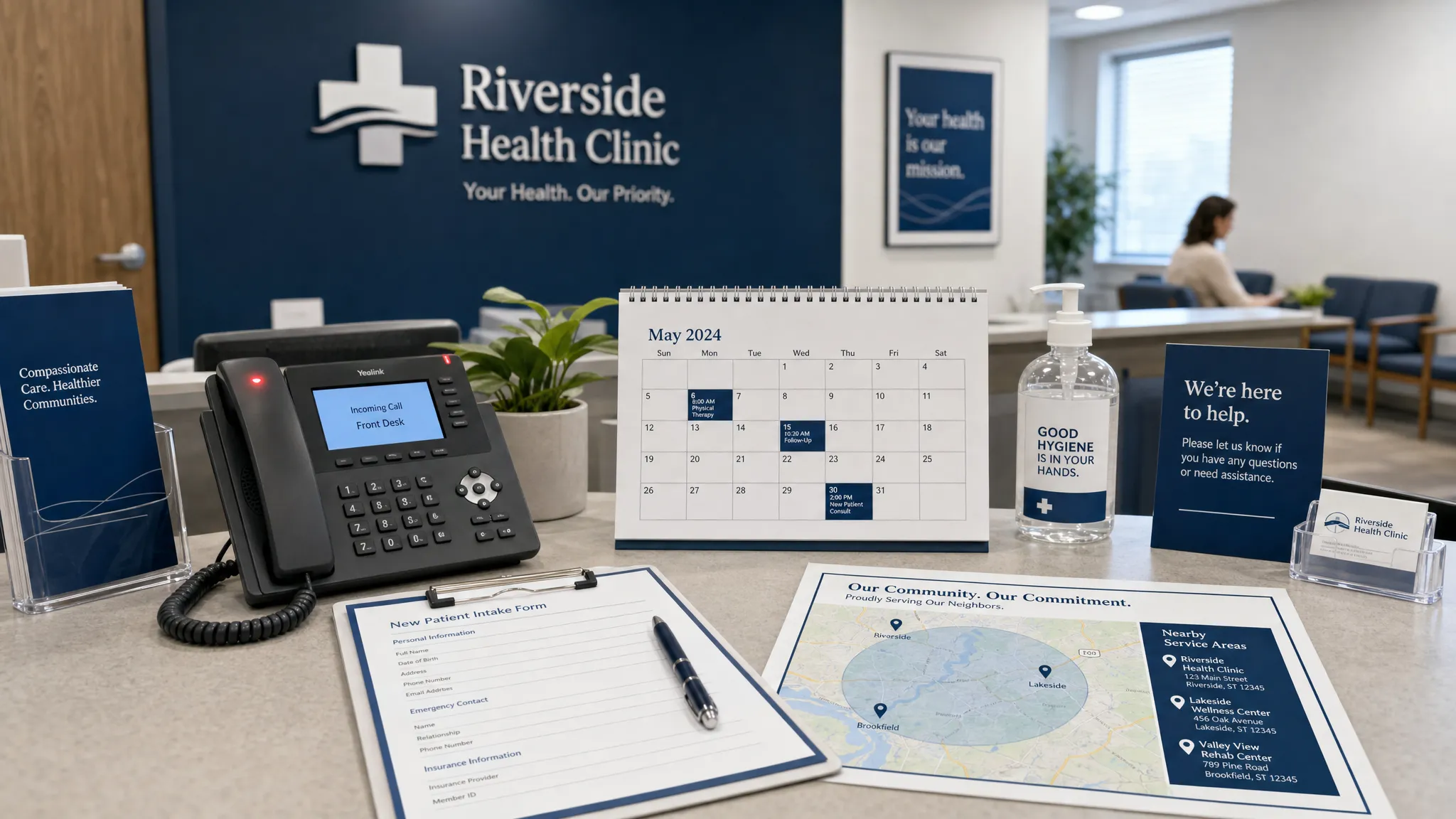
Track booked appointments, not just leads
Google Ads can optimize only toward the signals you give it. If the primary conversion is any form submission, the platform may find more form submissions, including low-quality ones. If the primary conversion is every phone call over thirty seconds, it may find more calls, including calls from people who never schedule.
Clinics need a measurement system that connects PPC activity to business outcomes. That does not always require complex software, but it does require discipline. At the very least, the practice should know which campaigns generated booked appointments and which ones generated noise.
A stronger reporting model includes these stages:
| Funnel stage | What to measure | Why it matters |
|---|---|---|
| Click | Search terms, device, location, cost | Shows where spend is going |
| Lead | Calls, forms, chat requests | Shows initial response volume |
| Qualified lead | New patient fit, service interest, location fit | Separates opportunity from noise |
| Booked appointment | Scheduled visits or consults | Connects ads to the calendar |
| Attended appointment | Arrivals and no-shows | Shows operational follow-through |
| Revenue or case value | Treatment acceptance or care plan value where appropriate | Helps budget toward profitable growth |
Be careful with data flow. Do not upload protected health information into ad platforms unless your legal and compliance process confirms that the setup is appropriate. Many clinics can still use privacy-conscious offline conversion tracking by passing non-sensitive conversion events and avoiding clinical details.
Use automated bidding only when the data is clean
Automated bidding can be powerful, but it is not magic. If the account is optimized for bad conversions, Google may become very efficient at finding more bad conversions.
Before using strategies such as Maximize Conversions or Target CPA, make sure the campaign has enough valid conversion volume and that primary conversions reflect patient value. A clinic should not give the same optimization weight to a newsletter signup, a vendor inquiry, a missed call, and a booked new patient appointment.
| Bidding approach | Best use case | Main risk |
|---|---|---|
| Manual or controlled CPC | New campaigns with limited data | Requires active management |
| Maximize Conversions | Accounts with reliable primary conversions | Can chase low-quality leads if tracking is weak |
| Target CPA | Mature campaigns with stable lead quality | Can restrict volume if the target is unrealistic |
| Maximize Conversion Value | Practices that can safely assign value tiers | Requires careful data governance |
For many clinics, the path is gradual. Start with tighter structure and clean tracking. Build enough appointment-quality conversion data. Then test automated bidding with clear guardrails and regular lead quality reviews.
Budget by service line, capacity, and competition
A clinic’s PPC budget should reflect goals, not guesswork. If the schedule has openings for hygiene, therapy evaluations, LASIK consults, or pain management visits, the budget should be tied to how many additional appointments are needed and what a reasonable acquisition cost looks like.
Competition also matters. A high-value service in a competitive metro may require more budget to produce reliable data. A niche service in a smaller market may reach useful volume with less spend. Seasonality can also affect results, especially for pediatric dentistry, vision exams, sports injuries, elective procedures, and end-of-year insurance behavior.
The key is to avoid spreading too little budget across too many priorities. A clinic that promotes ten services with a small daily budget may never collect enough data to optimize any of them. It is often better to focus on one or two growth priorities, prove the funnel, then expand.
If you need a more detailed budget planning framework, the guide to Google Ads cost for healthcare practices in 2026 explains how costs vary by specialty, market, and campaign objective.
Connect PPC with local SEO, reviews, and follow-up
Google PPC works best when it is not isolated. A patient may click an ad, scan reviews, check your Google Business Profile, visit the website again, and then call later. If your PPC traffic is strong but your reviews, website, or follow-up process are weak, the campaign may underperform.
For clinics, the most durable growth usually comes from combining paid search with local SEO, reputation building, conversion-focused service pages, and patient automation. PPC captures immediate demand. SEO and Google Business Profile optimization improve unpaid visibility. Reviews increase trust. Follow-up systems reduce missed opportunities.
This is why PPC should be viewed as one part of a broader patient acquisition system. Louisville Web Lab’s article on patient acquisition strategies for growing healthcare practices covers how these channels work together to fill schedules more consistently.
Common PPC mistakes clinics should avoid
Most underperforming clinic campaigns are not failing because Google Ads does not work. They are failing because the campaign is optimized for the wrong outcome or disconnected from the practice’s operations.
Watch for these issues:
- Sending every click to the homepage instead of a service-specific landing page.
- Running one campaign for multiple unrelated services.
- Targeting too wide of a service area without reviewing patient quality by location.
- Counting all calls and forms as equal conversions.
- Letting broad match spend freely before conversion quality is proven.
- Ignoring missed calls, slow follow-up, or front desk scheduling friction.
- Writing ads that are too vague to pre-qualify patients.
- Making claims that could create compliance or trust issues.
The fix is not always to spend more. Often, the better move is to narrow the campaign, improve the landing page, clean up tracking, and align the clinic team around what a qualified PPC lead looks like.
A simple 30-day optimization rhythm
Google Ads for clinics should be reviewed on a consistent cadence. Daily tinkering can create noise, but waiting months to inspect performance wastes budget. A practical first-month rhythm keeps the account focused without overreacting to small samples.
| Timeframe | What to review | What to improve |
|---|---|---|
| Week 1 | Tracking, calls, forms, search terms | Fix broken conversions and obvious irrelevant queries |
| Week 2 | Location, device, ad schedule, missed calls | Tighten targeting and align ads with staff availability |
| Week 3 | Landing page behavior and lead quality | Improve page clarity, CTAs, and pre-qualification |
| Week 4 | Booked appointments and cost per qualified lead | Reallocate budget toward the best service lines and locations |
After the first month, the campaign should shift from launch mode to improvement mode. That means ongoing search term reviews, ad testing, landing page testing, lead quality feedback, and budget adjustments based on actual appointment outcomes.
Frequently Asked Questions
Is Google PPC worth it for clinics? Yes, Google PPC can be worth it when the campaign targets high-intent local searches, sends traffic to service-specific pages, and tracks booked appointments instead of only clicks or impressions. It is usually weakest when campaigns are broad, undertracked, or disconnected from front desk follow-up.
How much should a clinic spend on Google Ads? The right budget depends on specialty, competition, location, service value, and how many new appointments the clinic needs. A focused campaign for one service line is usually better than spreading a small budget across many unrelated services.
Should clinics use broad match keywords? Broad match can work after a campaign has clean conversion data and strong negative keyword controls. For new clinic campaigns, exact and phrase match keywords often provide better control while the practice learns which searches produce qualified patients.
What is the most important PPC metric for healthcare practices? Booked appointments are usually more important than clicks, impressions, or raw leads. A complete scorecard should also review qualified calls, cost per booked appointment, appointment attendance, and downstream value where appropriate.
Can Google Ads help a clinic get leads quickly? Yes, paid search can generate visibility faster than SEO, especially for high-intent local searches. However, speed does not replace strategy. The clinic still needs accurate tracking, a strong landing page, and a reliable process for answering and following up with inquiries.
Turn Google PPC into booked patient appointments
A profitable clinic PPC campaign is not built on clicks alone. It is built on the connection between patient intent, local targeting, compliant messaging, conversion-focused pages, call handling, and appointment-level reporting.
If your practice wants Google Ads to produce more than traffic, Louisville Web Lab can help you identify gaps in your current patient acquisition system and prioritize the changes most likely to improve booked appointments. Start with a diagnostic strategy call through Louisville Web Lab and build a PPC strategy designed for measurable practice growth.