
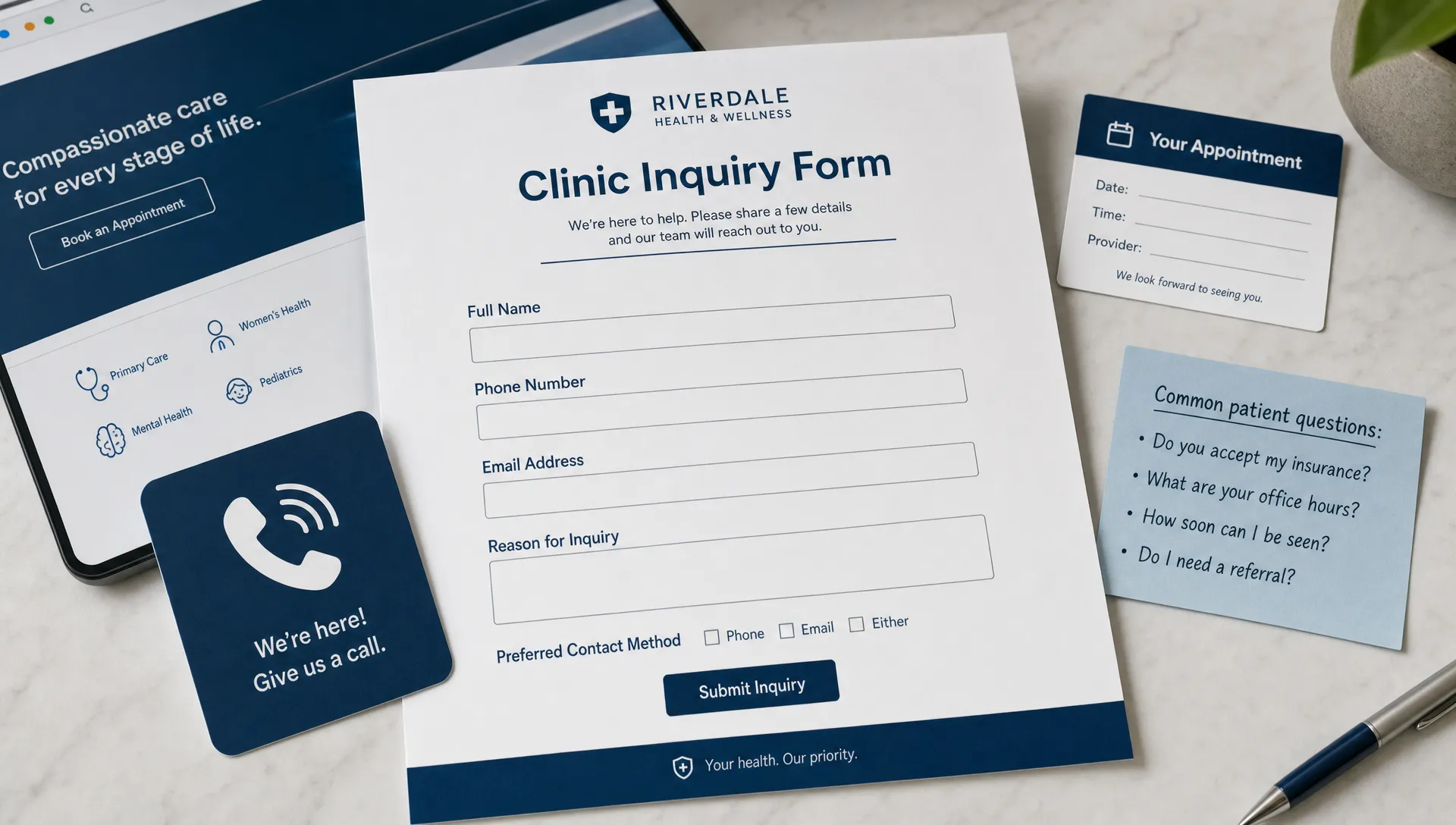
A healthcare website can look modern and still lose patients every day. The leak is rarely one dramatic failure. More often, it is a series of small moments where a visitor hesitates, gets confused, loses trust or decides to call another practice that made the next step easier.
For dentists, orthodontists, optometrists, pain physicians and specialty providers, conversion is not just a marketing metric. It is the bridge between search visibility and scheduled care. If your site gets traffic from Google, paid ads or referrals but the phone is not ringing the way it should, the issue may not be demand. It may be friction.
Below are 10 common website conversion leaks healthcare practices should fix before spending more on traffic.
What counts as a website conversion leak?
A conversion leak is any point where a potential patient has enough interest to move forward but fails to take the next step because the website gets in the way.
That next step might be a phone call, appointment request, referral inquiry, directions request, insurance question or consultation form. For elective services like Invisalign, LASIK, dental implants or regenerative medicine, it may also be a longer decision path that includes reading provider credentials, checking reviews and comparing treatment options.
The goal is not to pressure patients. The goal is to make the path clear, credible and easy.
If you are already thinking about a redesign, it helps to start with the leaks first. Louisville Web Lab has covered this broader principle in its guide to website design for conversion, but the checklist below focuses specifically on healthcare practice websites.
| Conversion leak | What it looks like | What to fix first |
|---|---|---|
| Vague headline | Visitors cannot tell what you do or who you help | State specialty, location and primary patient need |
| Hidden CTA | Phone and booking options are hard to find | Add visible call and request buttons |
| Slow mobile pages | Patients leave before the page loads | Improve speed and reduce page bloat |
| Overbuilt forms | Forms feel too long or intrusive | Ask only what is needed to start |
| Weak trust signals | Visitors doubt credibility | Show providers, reviews and credentials |
| Thin service pages | Pages do not answer patient questions | Add condition, treatment and next-step content |
| Confusing location info | Patients cannot confirm access or fit | Make hours, insurance and directions obvious |
| Generic ad landing pages | Paid clicks land on the homepage | Match landing pages to ad intent |
| Reputation gaps | Reviews are missing or stale | Strengthen review visibility and follow-up |
| No tracking | Nobody knows where leads are lost | Track calls, forms and booked appointments |
1. A vague above-the-fold message
The first screen of your website should answer three questions fast: what you do, where you do it and what the patient should do next.
Many healthcare websites open with broad phrases like “compassionate care for the whole family” or “advanced solutions for better health.” Those may be true, but they do not help a hurried patient decide if they are in the right place.
A stronger message is specific. For example, a dental implant practice in Louisville should not bury dental implants three clicks deep if that is a major growth service. An optometry clinic that treats dry eye should say so clearly. A pain management clinic should identify whether it helps with back pain, joint pain, neuropathy, workers’ compensation cases or another specific need.
The fix is simple but often overlooked. Use the first screen to include your primary service category, location or service area, the type of patient you help and a clear next step such as calling, requesting an appointment or scheduling a consultation.
2. Appointment actions that disappear on mobile
Healthcare searches often happen on a phone, sometimes between errands, after work or when symptoms become hard to ignore. If the phone number is hidden in a menu, the appointment button is low on the page or the form is hard to use with thumbs, the site is leaking ready-to-act visitors.
A good mobile conversion path should make the core action visible without making the page feel aggressive. Most practices need a tap-to-call button, a clear appointment request button and repeated calls to action after major sections of a page.
For urgent or high-intent specialties, such as emergency dentistry, acute chiropractic care or pain procedures, tap-to-call visibility matters even more. The patient may not want to read your entire site. They may simply need to know that you treat the problem, serve their area and can be reached easily.
3. Slow pages that make patients bounce before they read
Page speed is not only a technical issue. It is a patient experience issue.
Slow mobile pages are especially costly for healthcare practices because the visitor often has several local options. If your site takes too long to load, has oversized images, stacks too many scripts or shifts around as it loads, the patient may never reach the content that would have earned their trust.
Google’s Core Web Vitals documentation gives useful performance benchmarks for loading speed, responsiveness and visual stability. You do not need to obsess over every technical score, but you should care about whether real visitors can move through the site without delay.
Common fixes include compressing images, reducing unnecessary plugins, simplifying page layouts, improving hosting and checking mobile performance after every major website update. A routine maintenance process helps prevent these problems from coming back, which is why a website maintenance checklist for healthcare practices should include speed, mobile usability and form testing.
4. Forms that ask for too much too soon
A website form should lower the barrier to starting a conversation. Too many healthcare forms do the opposite.
Long forms can feel like paperwork before the patient has even decided to contact you. Sensitive questions can also create privacy concerns, especially if your marketing systems, analytics and form tools are not set up appropriately for healthcare. The U.S. Department of Health and Human Services provides guidance on HIPAA and online tracking technologies, and practices should treat form design as both a conversion and compliance-adjacent issue.
In most cases, the first inquiry form should ask for only the essentials needed to respond. Name, contact information, preferred location, general service interest and a brief message are often enough to begin. If more information is required, collect it through the appropriate secure workflow after the initial contact.
The form should also set expectations. Tell patients what happens after submission, such as “Our team will contact you to discuss appointment availability.” Avoid promising clinical outcomes or guaranteed availability unless your team can consistently deliver that promise.
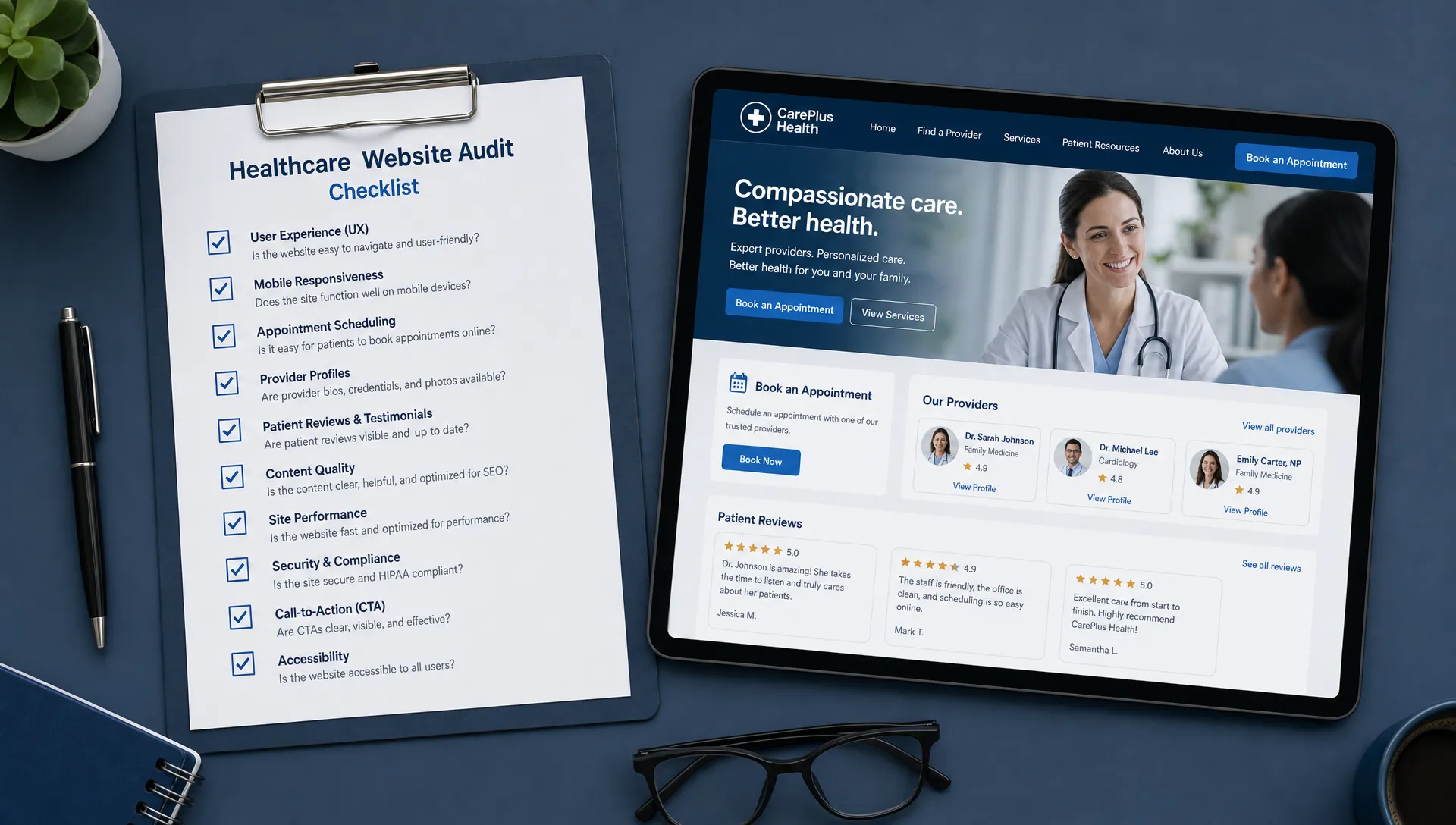
5. Missing trust signals at the point of decision
Patients are not buying a simple product. They are choosing someone to work on their teeth, eyes, spine, joints or long-term health. Trust signals need to appear before the visitor is asked to take action.
Trust signals can include provider photos, credentials, years in practice, review excerpts, insurance participation, financing options, professional affiliations, technology explanations and patient education. For visual specialties such as cosmetic dentistry, orthodontics, LASIK or aesthetics-related care, before-and-after content can be persuasive when it is accurate, properly consented and compliant with applicable rules.
A common leak happens when trust content exists somewhere on the site but not on the pages where patients decide. A dental implant page should not force visitors to leave that page to find the surgeon’s credentials. A dry eye treatment page should not make visitors hunt for evidence that the clinic actually provides advanced dry eye care.
Place trust close to the conversion moment.
6. Service pages that do not match patient intent
Healthcare providers often describe services in clinical terms. Patients often search in problem-based terms.
A chiropractor may talk about spinal decompression, but patients may search for “sciatica treatment near me.” An optometrist may promote meibomian gland dysfunction treatment, but patients may search for “burning eyes all day.” A dentist may offer endodontics, but the patient may search for “root canal pain.”
Strong service pages bridge that gap. They use patient-friendly language without dumbing down the care. They explain symptoms, who the treatment may be for, what to expect at the first visit, what questions the patient should ask and when the office should be contacted.
This is especially important for practices investing in SEO or Google Ads. If the page does not satisfy the patient’s intent, better rankings or more clicks will not solve the conversion problem.
7. Location, hours and insurance details that create doubt
Local healthcare decisions are practical. Patients want to know if the practice is close enough, open at the right time, accessible, in network or at least able to explain payment options.
If those details are missing or scattered, the visitor may hesitate. That hesitation becomes a leak.
Make location pages useful. Include address, phone number, hours, parking details when relevant, nearby landmarks if helpful and links to directions. If you serve multiple communities around Louisville or another metro area, clarify whether each location provides the service being promoted. Do not let a patient request an appointment for a service that is only available across town unless the page makes that clear.
Insurance information should be handled carefully. If you list accepted plans, keep the page updated. If plan participation changes often, explain how patients can confirm coverage with your team. For elective or cash-pay services, make financing or payment discussion options easy to find without turning the page into a price list if pricing varies by case.
8. Paid ad clicks that land on generic pages
Google Ads can produce high-intent traffic, but only if the landing page continues the conversation started by the ad.
A common leak occurs when every campaign sends visitors to the homepage. That forces patients to search again inside your website. Someone who clicked an ad for dental implants, cataract surgery, knee pain treatment or pediatric orthodontics should land on a page that speaks directly to that need.
A strong healthcare landing page usually includes one clear service focus, a headline that matches the ad intent, trust signals, location relevance, a simple conversion option and enough detail to help the visitor feel informed. It should not be cluttered with every service the practice offers.
This does not mean every ad needs a completely separate microsite. It means high-value campaigns deserve pages built for the patient’s decision path.
9. Reputation gaps that weaken confidence
Reviews matter because they reduce uncertainty. A patient may like your website, but if your reviews are hard to find, outdated or inconsistent with your positioning, the decision can stall.
This is not about chasing a perfect rating. In healthcare, a believable reputation includes volume, recency, specificity and professionalism. A few detailed reviews about friendliness, clear explanations, scheduling, comfort or treatment experience can be more useful than a generic five-star badge with no context.
Your website should make reputation easy to validate. Consider placing selected review excerpts near related services, linking to relevant review platforms and showing provider-level reputation when appropriate. Review content should be handled honestly. Do not edit reviews in a way that changes meaning, and be careful not to disclose protected information when responding publicly.
A review strategy also needs an operational piece. If happy patients are not being asked consistently and ethically to share feedback, reputation growth becomes random.
10. No tracking from visit to booked appointment
The most expensive conversion leak is the one nobody can see.
Many healthcare practices know how many website visits they get, but not how many calls, form submissions or booked appointments came from each channel. Some know lead volume but not lead quality. Others can see form fills but have no idea how many turned into scheduled consults.
At minimum, practices should understand which pages generate inquiries, which calls come from organic search or paid ads, which forms are completed and where patients drop off. For paid media, conversion tracking needs to be set up carefully so it supports optimization without mishandling sensitive health information.
If you are evaluating healthcare conversion optimization services in Louisville, KY, ask how the agency thinks about the full path from traffic to appointment, not just website design or ad clicks. Louisville Web Lab makes a similar point in its article on what a Louisville digital marketing agency should fix first: the right first fix depends on the bottleneck.
How to prioritize the leaks
Not every practice should start in the same place. A high-traffic website with weak calls to action has a different problem than a beautiful new website with no tracking. A specialty clinic running Google Ads has a different conversion path than a general dentistry practice relying on local SEO and referrals.
Use this quick prioritization framework:
- If traffic is strong but leads are weak, fix messaging, CTAs, forms and trust signals first.
- If leads are strong but appointments are weak, review lead quality, response speed, follow-up and call handling.
- If paid ads are spending but results are unclear, fix landing pages and tracking before increasing budget.
- If mobile engagement is poor, test speed, tap-to-call visibility and mobile form usability.
- If local search traffic is growing but patients are not choosing you, improve location pages, reviews and service-specific trust content.
The best conversion work is practical. It identifies where real patients hesitate, then removes the friction without making the website feel pushy.
Frequently Asked Questions
What is website conversion optimization for healthcare practices? Website conversion optimization is the process of improving a practice website so more visitors become patient inquiries, phone calls, appointment requests or scheduled consults. For healthcare practices, it must account for trust, privacy, mobile usability, local intent and the patient’s decision-making process.
Which website conversion leak should a healthcare practice fix first? Start with the leak closest to revenue or patient acquisition. If people visit service pages but do not contact you, improve CTAs, trust signals and forms. If people contact you but do not schedule, review response time, lead quality and follow-up.
Do healthcare websites need different conversion optimization than other local businesses? Yes. Healthcare decisions involve trust, credentials, privacy, insurance, accessibility and clinical relevance. A conversion strategy that works for a restaurant or home service company may not be appropriate for a dental, vision, pain management or medical practice.
Can conversion optimization help if my practice does not get much website traffic yet? It can still help, but the priority may be different. Low-traffic websites often need SEO, Google Business Profile improvements or ads along with conversion fixes. The website should be ready to convert before you invest heavily in more traffic.
How often should a healthcare practice review website conversion performance? Review basic performance monthly, including calls, forms, top pages, mobile usability and appointment quality. Larger audits can be done quarterly or when launching new services, campaigns, locations or website updates.
Turn more website visitors into patient opportunities
If your practice is getting traffic but not enough calls, forms or booked appointments, more marketing spend may not be the first answer. The first answer may be finding and fixing the leaks.
Louisville Web Lab helps healthcare practices improve SEO, Google Ads, websites and patient acquisition systems with a focus on measurable growth. If you want a clearer path from visibility to appointments, book a diagnostic call and identify what your website should fix first.